Introduction to Commodities: From Inflation Protection to Economic Growth Drivers
Learn how commodity ETFs can offer protection against inflation, diversification, and exposure to economic growth factors for Canadian investors.


Commodities are at the base of everything we produce and consume, from the food we eat to the cars that we drive. They are the raw materials needed for society to continue functioning, and for our consumerism to continue thriving. Without an ample supply of commodities, our stores would soon be empty (if they could be built at all), and our factories would close. They are also one of the most valuable asset classes that investors can own during inflationary periods, as their prices are much more aligned to supply-demand dynamics than those of individual securities.
Commodities are closely tied to the concept of intrinsic value, meaning that value is inherent to the good, rather than something that is ascribed to it. An apple that is not sold for profit can be consumed, while a lump of coal that is not packaged as a financial product can be burned for warmth.
Stocks and bond certificates do not have intrinsic value, as the certificate itself cannot actually be used to produce anything and cannot be consumed. It simply represents a nominal value assigned to the security.
Therefore, commodities should technically be more responsive to the laws of supply and demand, than the price of a security, which can often be influenced by psychological factors.
Understanding Commodity Types
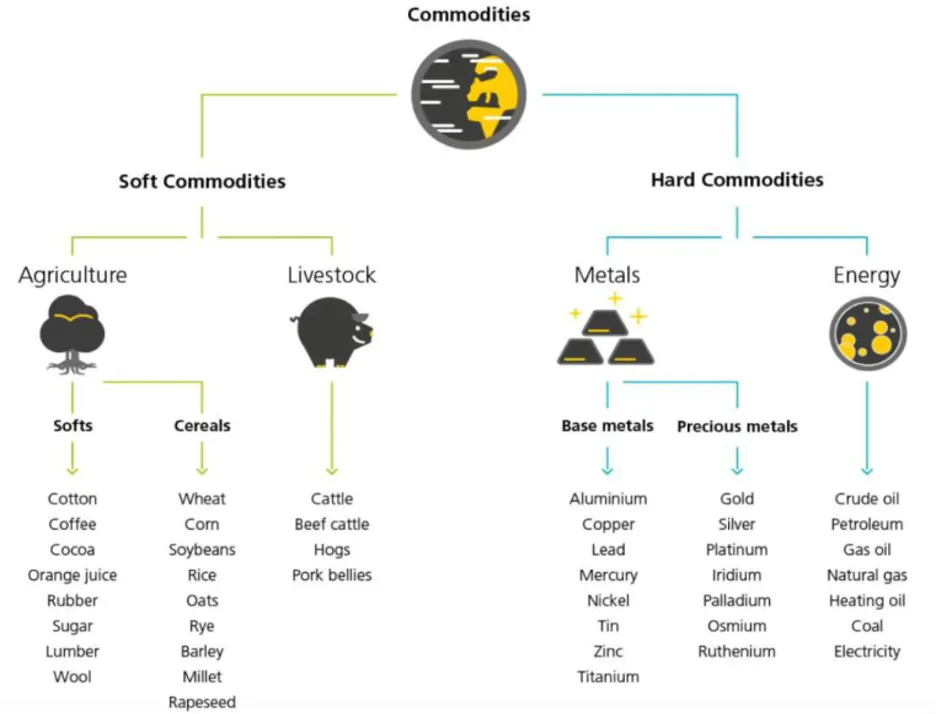
Commodities can be split up into two main groups, and four sub-categories as per the image below:
Soft Commodities
Soft commodities are usually grown, and can be influenced by environmental factors such as droughts, floods, or forest fires, and can see rapid price increases when these events occur. Unlike a finished good whose production can be increased or decreased in a factory based on market conditions, soft commodities are a lot more dependent on external factors, despite our best efforts to increase crop and livestock yields.
A simple avian flu virus can wipe out millions of chickens causing inflation in not only the price of meat but also eggs, while a war can disrupt supplies of wheat worldwide and wreak havoc on nations dependent on imports.
Hard Commodities
Hard commodities on the other hand are mined, which is arguably a more labor and technologically-intensive endeavor, but their production is considerably less reliant on weather conditions. Their main uses are industrial in nature and are often closely associated with economic cycles. Getting exposure to Energy commodities in particular may be advantageous given the strained supply/demand dynamics we are currently experiencing. With the reopening of China and the lack of recessionary signals in Europe and the U.S., Oil prices are projected to move higher later into the year.
The relationship between Canadian GDP, and soft and hard commodities indices can be seen below:
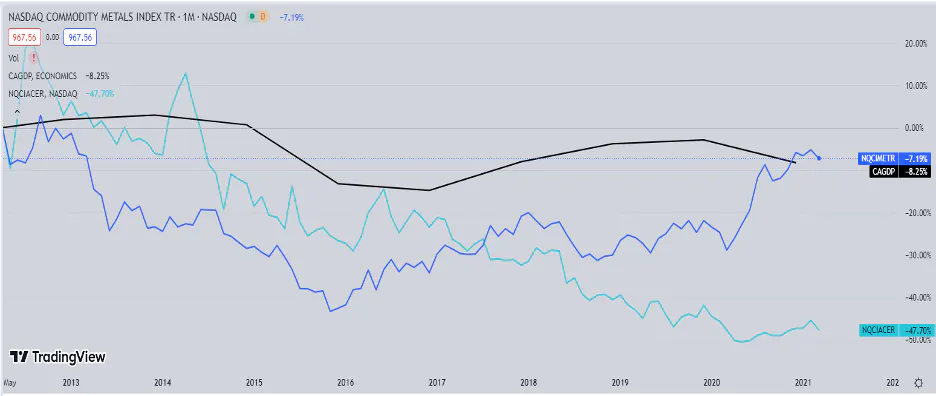
The Black line represents Canadian GDP, whereas the Dark Blue and Light Blue lines represent the Metals and Agricultural Commodity indices traded on Nasdaq. There is a clear lagged directional relationship between the price of Hard Commodities and Canadian GDP, which confirms the notion that our economic growth is particularly dependent on hard commodity prices. There is no clear connection between agricultural commodities and our GDP.
Why Invest in Commodities?
Investing in commodities, particularly for Canadian investors, can serve three main purposes.
Protection Against Inflation
The intrinsic value offered by commodities can help protect against inflation. As commodity prices rise, inflation often follows. Investors with a healthy exposure to commodities can offset some of this inflation by investing directly in the resources that are increasing in price. A recent Duke University study found commodities perform exceptionally well during periods of high inflation, defined as 5% or more. Interestingly enough, the study found that replicating exposure by investing in commodity-related equities (energy or mining companies) provided significantly lower returns during inflationary periods.
Direct Exposure to Economic Growth Factors
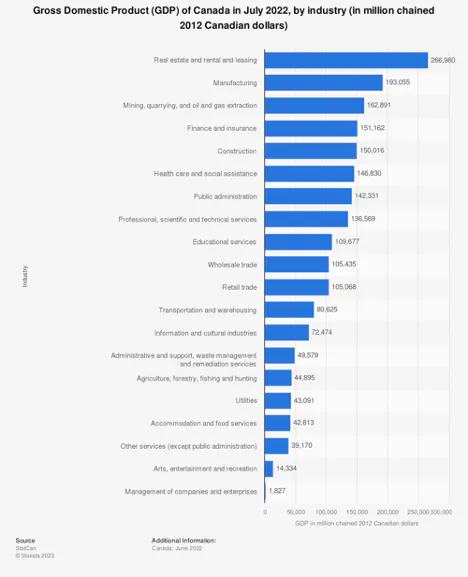
Direct exposure to Economic growth factors and a significant contributor to Canadian GDP. As of 2022, the Metals and Oil Extraction sectors were the 3rd largest contributor to our GDP with roughly 8% contribution.
Diversification of Returns
While inflation typically drives interest rates higher, impacting stocks and bonds negatively, commodity-driven inflation is beneficial to commodity investors with a healthy allocation in their portfolios. The rule of thumb is to allocate 5-10% of your portfolio to commodities, however, I would argue that the allocation should mirror the contribution of commodities to the overall GDP, in order to better simulate the drivers of inflation. Historically in Canada, this has been between 5-10%, but it may not be the same in other jurisdictions.
The Verdict on Commodities
Historical data, as well as the numerous studies conducted on the role of commodities in an investor’s portfolio, suggests that exposure to these assets could certainly help provide protection against inflation – as well as offer a diversified source of portfolio returns that is fairly negatively correlated to bond and equity markets. However, as with any investment, it is essential that appropriate due diligence is carried out to ensure asset allocation decisions align with an investor’s objectives, risk appetite and time horizon.
As a final thought, investors should also consider what stage of the economic cycle they find themselves in before making their allocation decision. A study done by S&P Dow Jones shows that commodity returns depend heavily on the economic cycle:
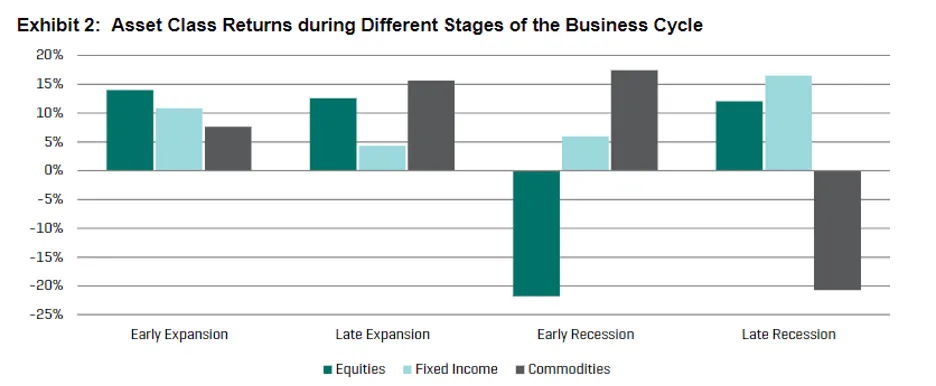
Considering our current position in the cycle, which is likely in Late Expansion or Early Recession, coupled with persistently high inflation, investors can expect commodities to perform well if history is any indication.
Exposure to Energy Commodities
Gaining exposure to Canada’s 3rd largest industry as a proportion of GDP, in an environment that is favorable to commodities can be achieved through a best-in-class ETF, such as the Ninepoint Energy Fund ETF (NNRG). The fund benefits from an experienced management team and strong relationships with the Canadian energy sector, allowing them excellent deal flow and access to information. NNRG has had a performance of 96% since its inception in May of 2021.
For investors looking to benefit from dividend income growth, the Ninepoint Energy Income Fund (NRGI) is a great option, as it invests in Canadian energy companies with a high potential to raise dividends over the coming years. The management team looks for companies who have pledged to allocate upwards of 70% of Free Cash Flow towards dividends or buybacks, ensuring that investors will benefit from a growing stream of dividends over the years to come.
Please note this article is for information purposes only and does not in any way constitute investment advice. It is essential that you seek advice from a registered financial professional prior to making any investment decision.