Investing in the Innovation Dividend
Fidelity’s FINN ETF captures global innovation beyond tech, blending disruptive leaders with service and product innovators like Costco and Philip Morris.


The innovation dividend refers to the economic benefits derived from the strategic application of creativity, technology, and market knowledge to develop marketable innovations. In simple terms, the ability to create a new service or product that appeals to a mass market allows one to reap immense benefits.
In today’s business environment, most discussions about innovation inevitably focus on Artificial Intelligence or Semiconductors, which is understandable given the transformative and far-reaching nature of the technologies. However, other subtle innovations are present or underway in different industries that are making significant business impacts.
FINN: A Globally Focused Innovation Solution
Most innovation-focused ETFs tend to heavily favor the technology sector, which, as mentioned earlier, is understandable. However, for investors looking for an innovation-themed ETF with moderate exposure to other sectors of the global economy, the Fidelity Global Innovators ETF (Ticker: FINN) is a turnkey, flexible investment strategy centered on innovative and disruptive companies in today’s rapidly changing world. The fund benefits from Fidelity’s extensive global research platform by targeting compelling opportunities across both developed and emerging markets.
While the fund does have a material exposure to the technology sector, 46.3% as of July 31, 2025, the non-tech equities that are present in the fund are reflective of companies that have developed a high level of service or product innovation that has garnered them strong customer loyalty and dominant market share in their industry.
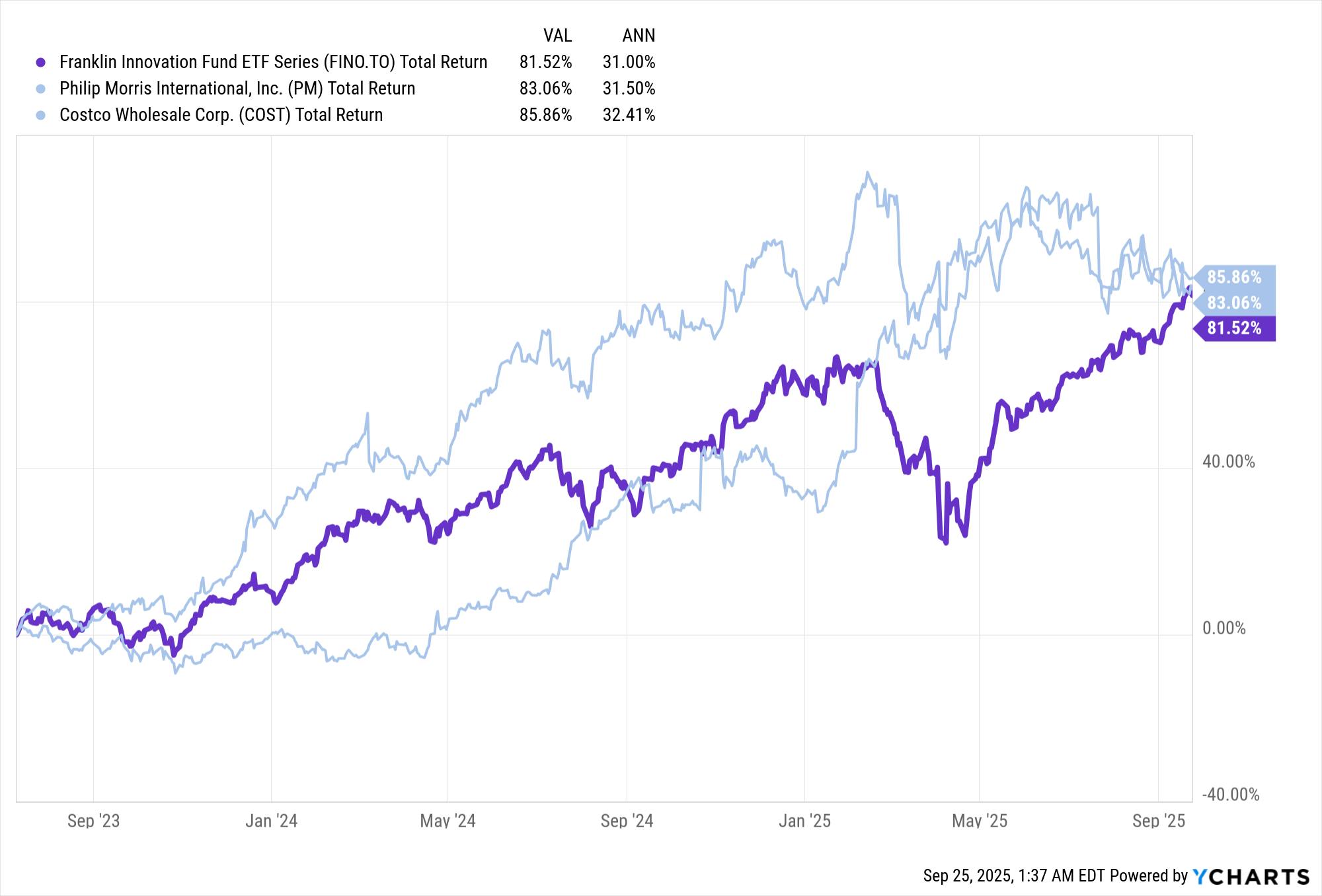
Service Innovation Example: Costco, a company renowned for its membership model and customer retention, is a holding within FINN. Costco exemplifies service innovation, as the value the big-box retailer provides to its 79.6 million paid membership customers, approximately half of which are executive tier members, is worth the price. The firm’s membership model enables negotiating strength with its vendors, which benefits customers and is accretive to the firm’s profit margins. Furthermore, the insights gained from their membership have resulted in its private label brand, Kirkland Signature, being a material contributor to total sales.
Product Innovation Example: The societal shift regarding smoking has required Philip Morris International, Inc. (PMI), a holding within FINN, to expand their product offerings. Due to advances in science and technology, along with substantial investment by PMI and others, smoke-free alternatives that are less harmful than cigarettes are now available. These innovations include nicotine-containing products like heated tobacco, e-vapor, and oral smokeless products. Although they are not entirely risk-free, these improved products have been shown to release significantly lower amounts of harmful and potentially harmful substances compared to cigarettes because they do not involve burning tobacco. Undoubtedly, the best way to avoid the dangers of smoking is never to start or, for those who do smoke, to quit. However, for adults who do not quit, switching to a smoke-free product is a far better option than continuing to smoke.
The investment strategy employed by FINN has rewarded investors immensely, as evidenced by the fund’s performance over the past five years. While the fund’s allocation to big tech firms undoubtedly added to performance, its exposure to non-tech firms was also additive.
Looking at Other Innovation-Themed Offerings
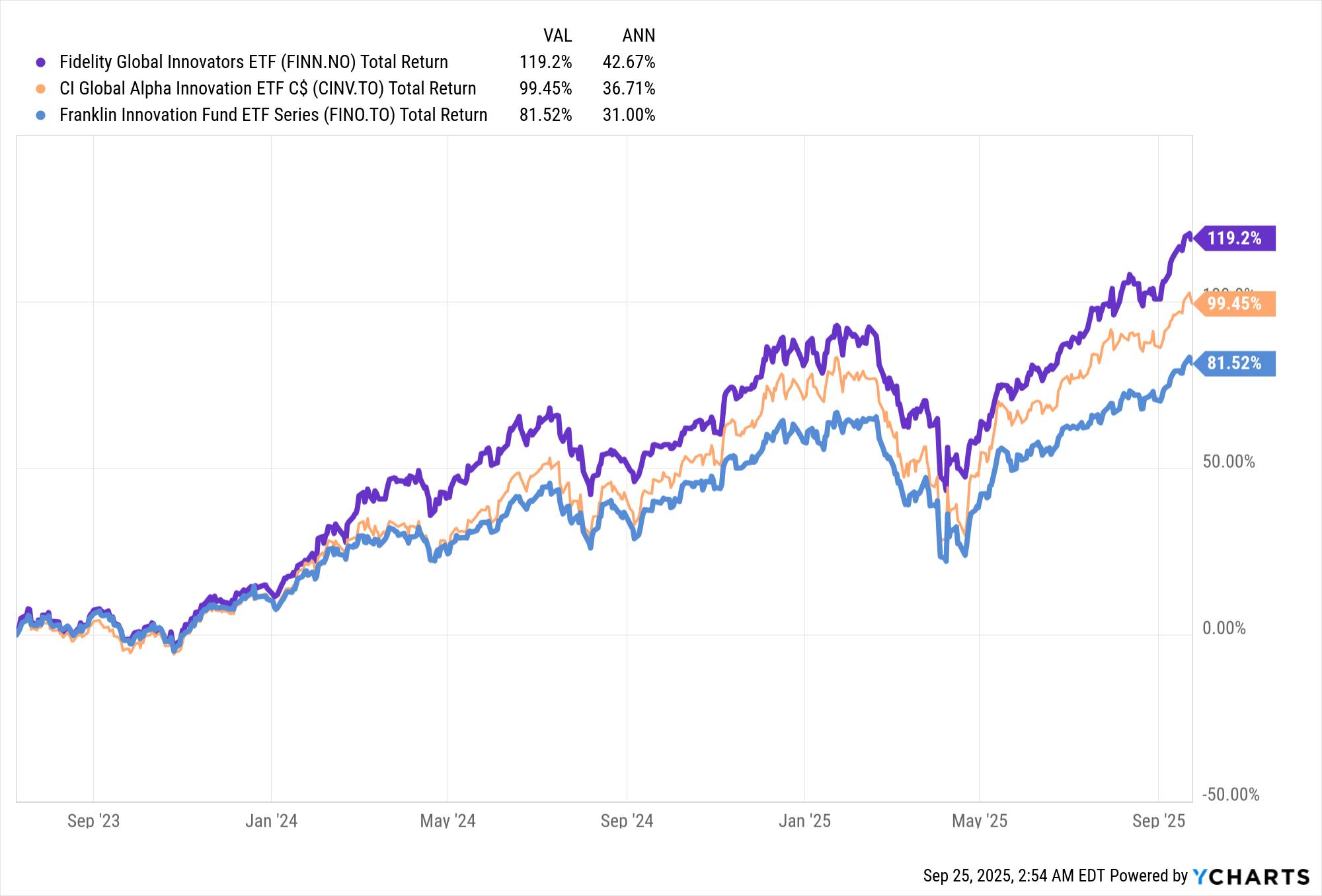
Beyond FINN, there are other notable innovation-focused options for investors, such as the Franklin Innovation Fund (Ticker: FINO) and the CI Global Alpha Innovation ETF (Ticker: CINV/CINV.U).
FINO invests primarily in equity securities of issuers with maintainable innovation-driven growth prospects while following a sustainable investment approach. In selecting equity investments, the manager utilizes fundamental, bottom-up research to seek companies that meet its criteria of maintainable growth driven by innovation. These companies are leaders in innovation, take advantage of new technologies, have superior management, and/or benefit from new industry conditions in the dynamically changing global economy. As of July 31, 2025, the fund’s allocation to the technology sector was approximately 53%.
CINV is an actively managed solution that primarily invests in equity and equity-related securities of companies from around the world that are positioned to benefit from innovations and advancements in technology, products, processes, or services. As of August 31, 2025, the fund’s allocation to the technology sector was approximately 75%.
For Canadian investors looking for innovation-themed ETFs, many options are available. While we often associate innovation with technology, especially considering current breakthroughs, it is also useful to understand innovations in non-technology industries and how they can enhance business outcomes.
Please note this article is for information purposes only and does not in any way constitute investment advice. It is essential that you seek advice from a registered financial professional prior to making any investment decision.