Lessons from the Gold Rally
Gold’s 2025 rally offered more than safe-haven returns; it highlighted how second-order thinking can uncover opportunities in miners, precious metals, and copper tied to AI-driven electrification.

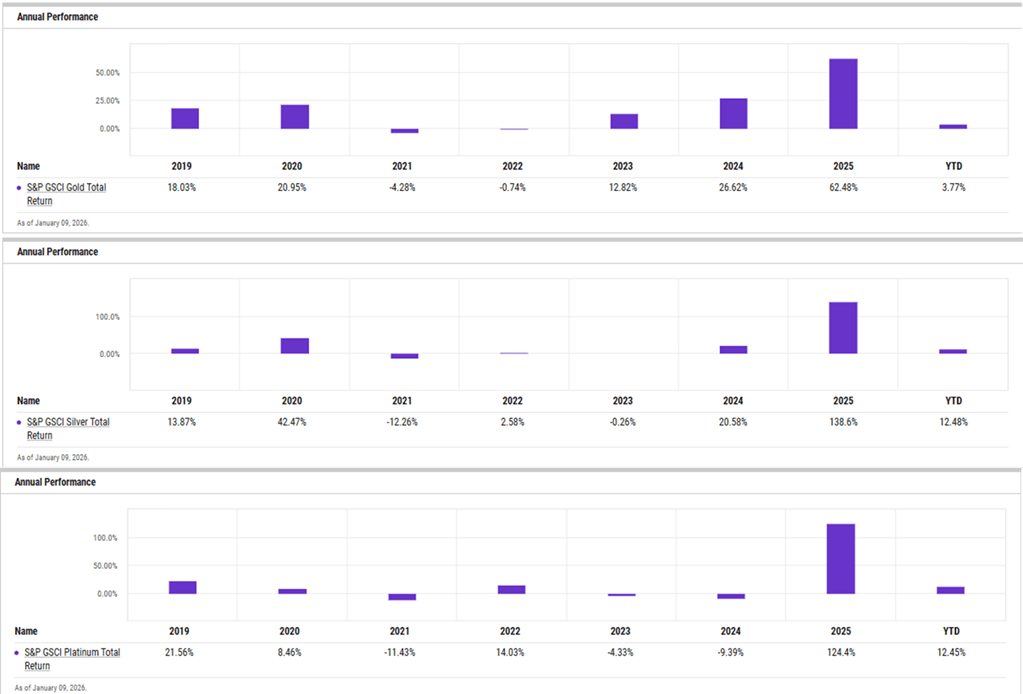
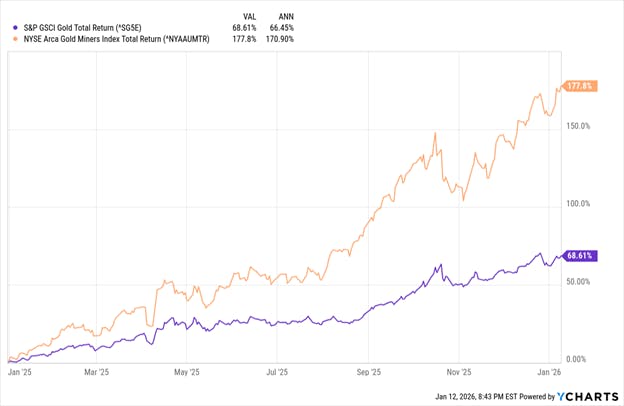
Gold’s performance in 2025 will be remembered not only for its strength but also for the context in which it occurred. Amid rising uncertainty, investors sought safety in the asset, given its attributes as an inflation hedge and its ability to preserve purchasing power. However, gold’s rally had secondary effects as well. The first was a rally in gold-mining equities, as rising gold prices incentivized miners to fund new exploration and mine expansions. Secondly, the rise in gold prices spurred increases in the prices of other precious metals, namely silver and platinum.
The pivot towards gold during periods of investment uncertainty is a generally accepted course of action. However, investors who had the foresight to also invest in gold miners and other precious metals at this time followed an inductive change of reasoning that paid off.
Learning From the Gold Rally: Second Order Thinking
Lauded investors, such as Warren Buffett and Ray Dalio, have spoken about ‘second-order’ thinking, a mental model that encourages thinking beyond the immediate results of an event and considers the tangential and cascading effects that may occur.
In the case of 2025’s gold rally, investors pivoting towards gold at the onset of market uncertainty was the ‘first order’ effect, a predictable or plausible course of action. The resulting rally in gold’s price, which prompted gold miners to capitalize on its momentum, was the ‘second-order’ effect. The rally in other precious metals, because of gold’s strong performance, is a tangential effect.
Applying Second Order Thinking to AI
Given the promise of AI, big tech’s investment in the space will continue to rise in 2026 and beyond. According to Goldman Sachs, the estimated 2026 AI capital expenditure is $527 billion, with expectations that this figure will increase over the year. While many investors have come to accept that this level of spending is necessary, there is also evidence of an emerging bifurcation, with investors steering away from firms where operating earnings growth is under pressure and capex is funded by debt. Conversely, investors have rewarded companies demonstrating a clear link between capex and revenues, such as some of the world’s biggest cloud platform operators.
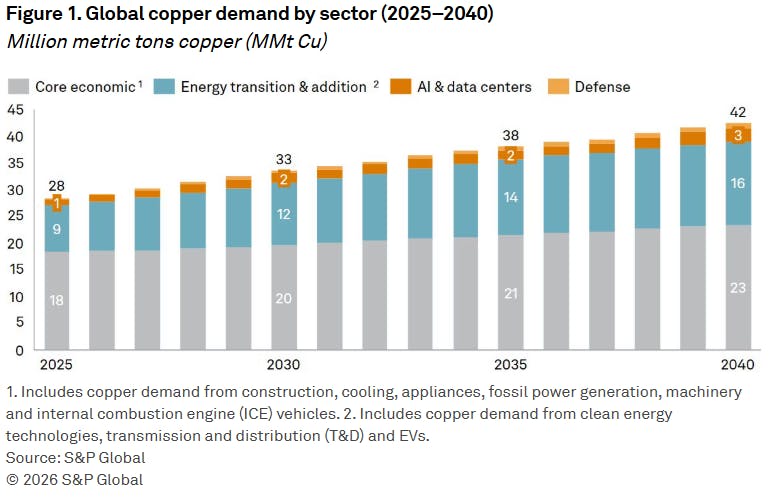
While investors can take time to identify individual winners and losers in the AI landscape, an alternative approach is to consider what AI advancement is truly dependent on: electrification. In turn, electrification depends on the availability of copper, a critical metal that is growing in global significance.
As noted in a recent S&P Global research report, global electricity demand will increase by nearly 50% by 2040. In the United States, electricity consumption has changed little year over year for a quarter century, but it is now beginning to grow at a rate that could reach 2.5% annually. This change in energy consumption comes at a time when half of the U.S. Gross Domestic Product (GDP) growth is being attributed to AI spending – largely on computer chips, data centres, and the electric power systems on which they run.
The proliferation of AI and data centers has materially increased copper demand from 28 million metric tons in 2025 to an estimated 42 million metric tons by 2040.
Investing in Copper
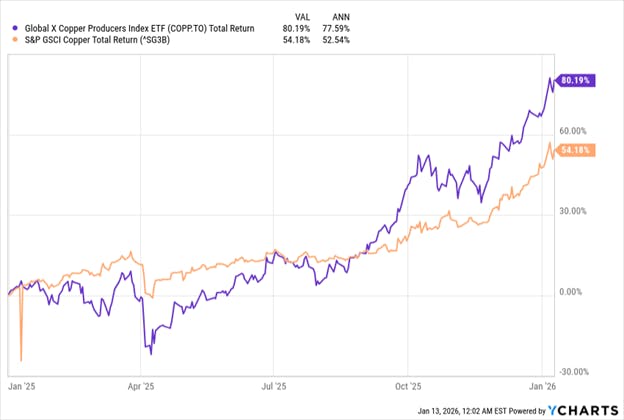
Given the essentiality of copper for electrification and AI development, companies that supply copper to the market would reflect some of the fundamental economic value derived from the critical mineral and could be a source of wealth-building for investors. For investors seeking exposure to these companies, the Global X Copper Producers Index ETF (Ticker: COPP) tracks companies active in copper ore mining listed on select North American stock exchanges. Currently, COPP seeks to replicate the performance of the Solactive North American Listed Copper Producers Index.
Please note this article is for information purposes only and does not in any way constitute investment advice. It is essential that you seek advice from a registered financial professional prior to making any investment decision.