How U.S. Elections Shape Stock Market Trends and Top ETFs to Watch
A look at the historical performance of markets under both U.S. Political Parties.

With less than 30 days until the U.S. Presidential Election, Vice President Kamala Harris and former President Donald Trump are making a concerted push to amplify their respective platforms to the American public; with much of the world looking on with keen interest. Though both candidates have outlined their economic platforms (See: Top ETFs to Benefit From Trump Second Presidency and ETFs To Consider If Kamala Harris Wins the U.S. Election), many investors and market participants may still wonder how presidential elections impact the market.
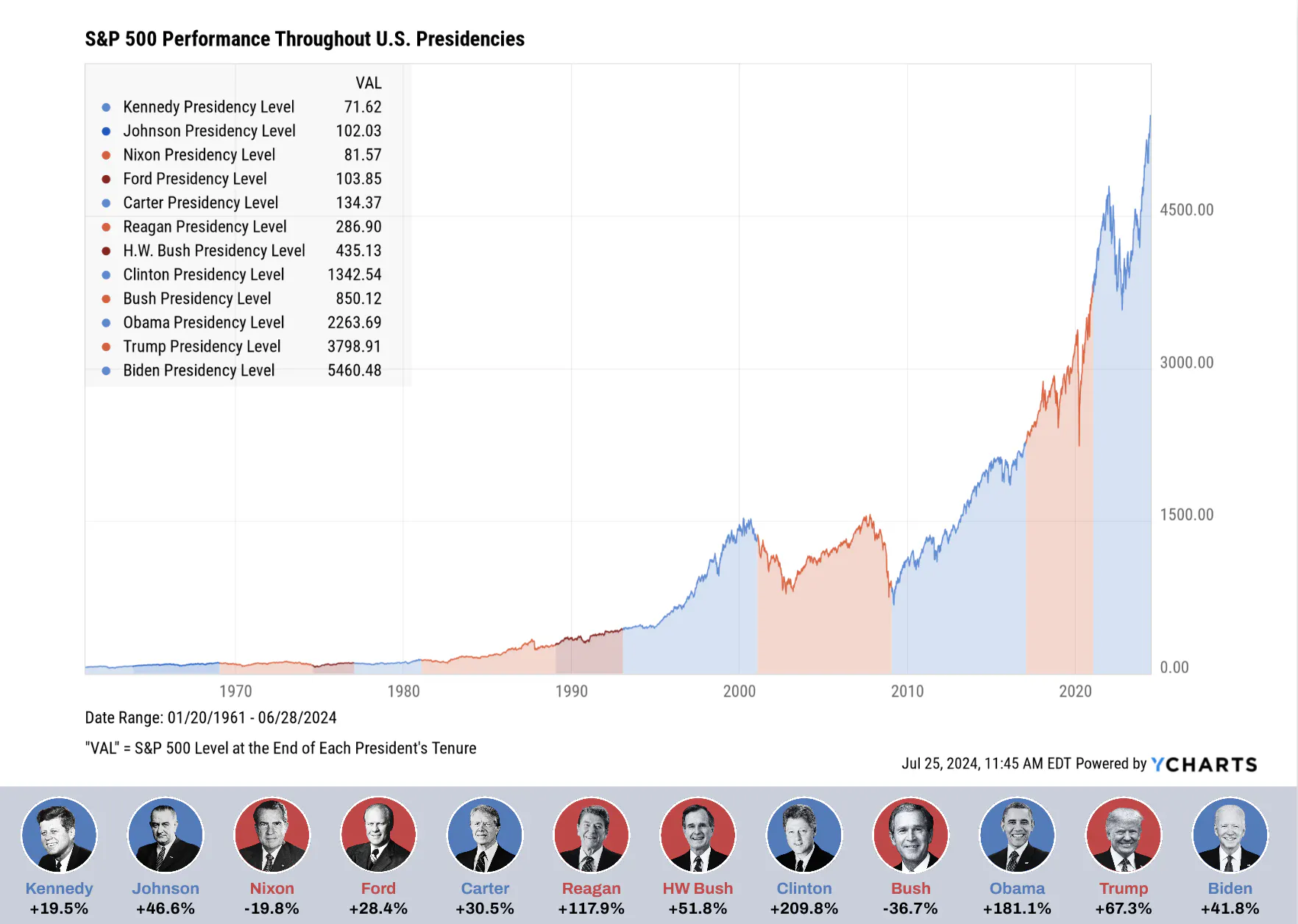
S&P 500 Performance through U.S. Presidencies
Recent research by YCharts has examined how markets have performed under various presidents and their respective political parties. Going back to 1961, the S&P 500 Index has posted a negative return during only two presidencies: Richard Nixon and George W. Bush. Despite the change in presidential leadership, the S&P 500 Index has consistently grown in value over the long term, regardless of who occupied the Oval Office.
Impact of Congressional Leadership on S&P 500 Performance
Though the U.S. Presidential Election takes the headline billing, congressional elections are also slated to occur in November 2024. Given the nature of the interaction between both branches of the U.S. government, congressional leadership can have a material impact on the president’s ability to achieve their agenda.
As illustrated in YChart’s analysis, historically, higher average annualized returns have occurred during a divided Congress, where one party controls the House of Representatives or United States Senate and the other holds a majority in the second chamber. Lower returns have come during Democratic majorities in both the House and Senate, while higher returns have taken place under Republican control of both congressional chambers. In any case, the market has historically been positive under all six government compositions.
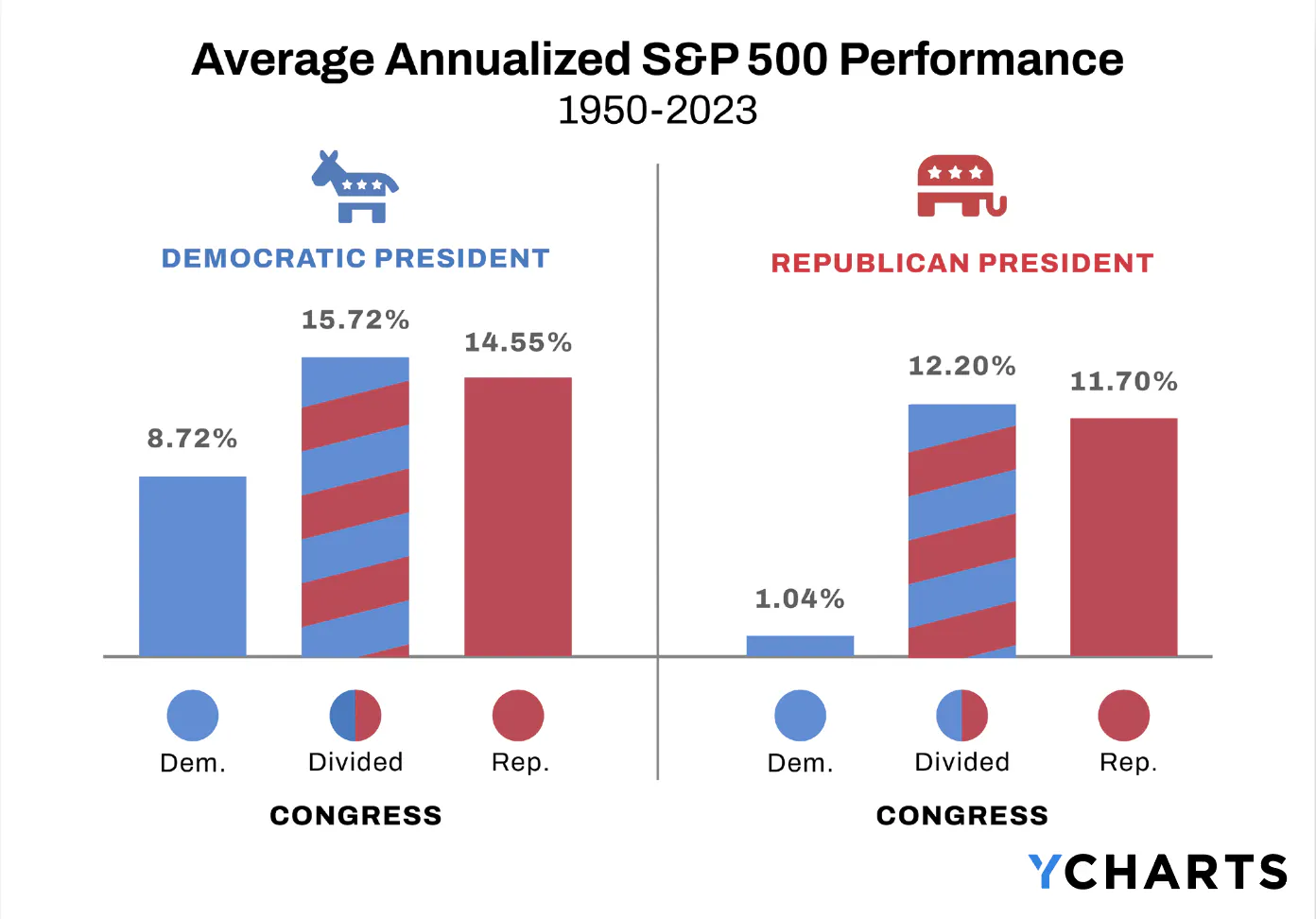
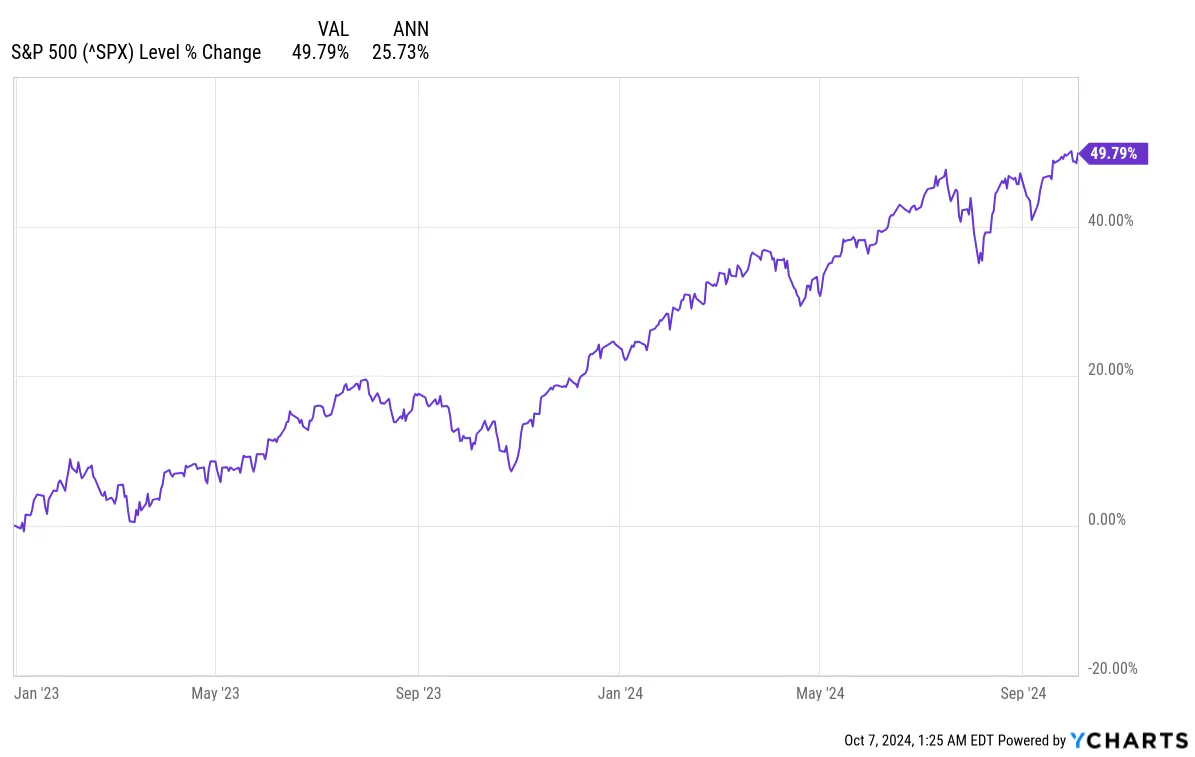
Under the current government of a Democratic president and divided Congress, the S&P 500 Index has returned 49.79% (25.73%) year to date (as of October 4th, 2024), thus far outperforming the historical average referenced earlier.
Takeaway
Although changes in the U.S. political landscape may influence the market environment, historical data shows that staying invested has been beneficial over the long term. Regardless of which political candidate or party assumes leadership, the S&P 500 Index has demonstrated consistent growth across various political transitions.
For investors seeking to invest in the S&P 500 Index, the Vanguard S&P 500 Index ETF (Ticker: VFV) tracks the performance of a broad U.S. equity index that measures the investment return of large-capitalization U.S. stocks. Similarly, the iShares Core S&P 500 Index ETF (CAD-Hedged) (Ticker: XSP) has a similar focus, but the index’s performance is hedged to Canadian dollars.
As we approach the culmination of the U.S. presidential race, with much uncertainty being present in the near term, having a long-term focus and remaining invested has proven to be a successful approach throughout all political cycles.
Please note this article is for information purposes only and does not in any way constitute investment advice. It is essential that you seek advice from a registered financial professional prior to making any investment decision.