Why European Banks ETFs Outperformed in 2025
European bank stocks quietly surged in 2025. Here’s how the Evolve European Banks Enhanced Yield ETF delivered income and strong returns.

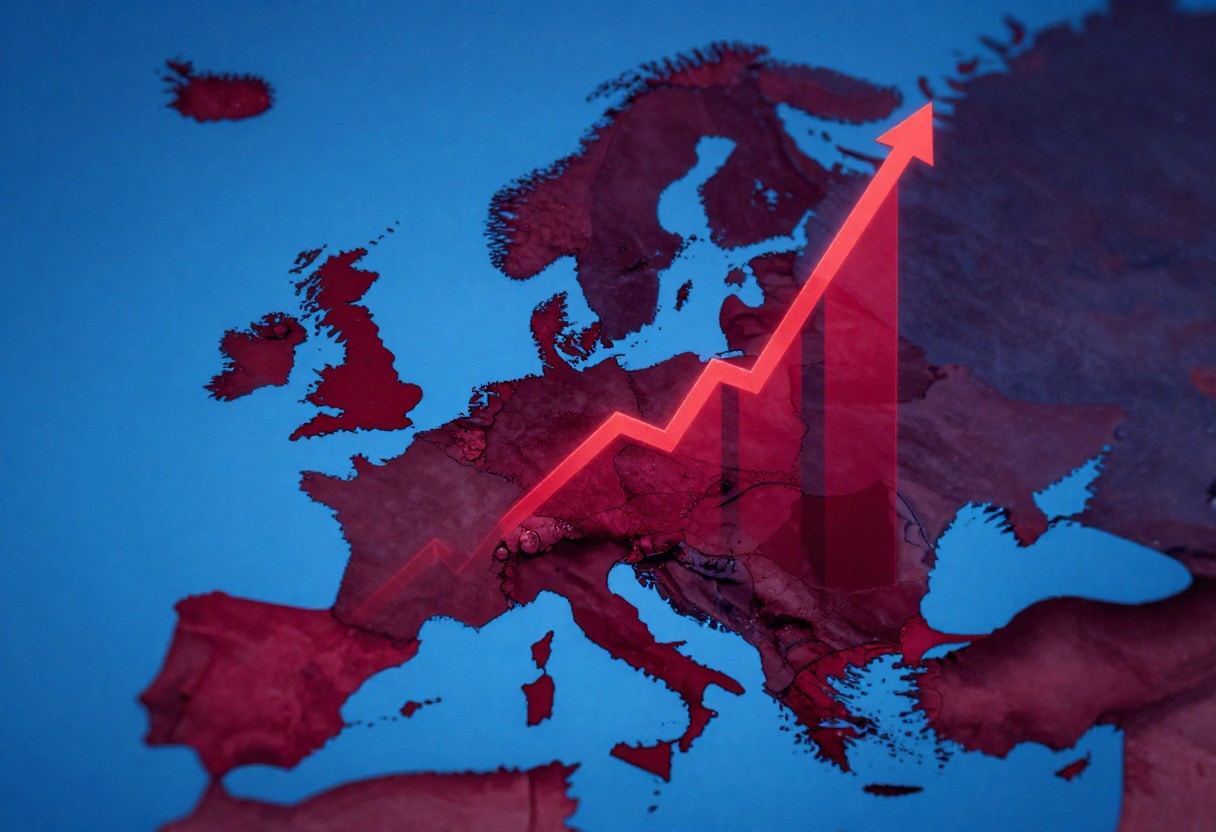
While the strong performance of precious metals, namely gold and silver, captured news headlines in 2025, the strong performance of European financials, specifically banks, may have flown under the radar for some investors. The recent performance of the Evolve European Banks Enhanced Yield ETF (Tickers: EBNK/EBNK.B/EBNK.U), which replicates the Solactive European Bank Top 20 Equal Weight Index and writes covered call options on up to 33% of its portfolio, underscores the European banking sector's strong performance. In 2025, EBNK (hedged) returned approximately 60%, far exceeding the return of the S&P/TSX Composite index.
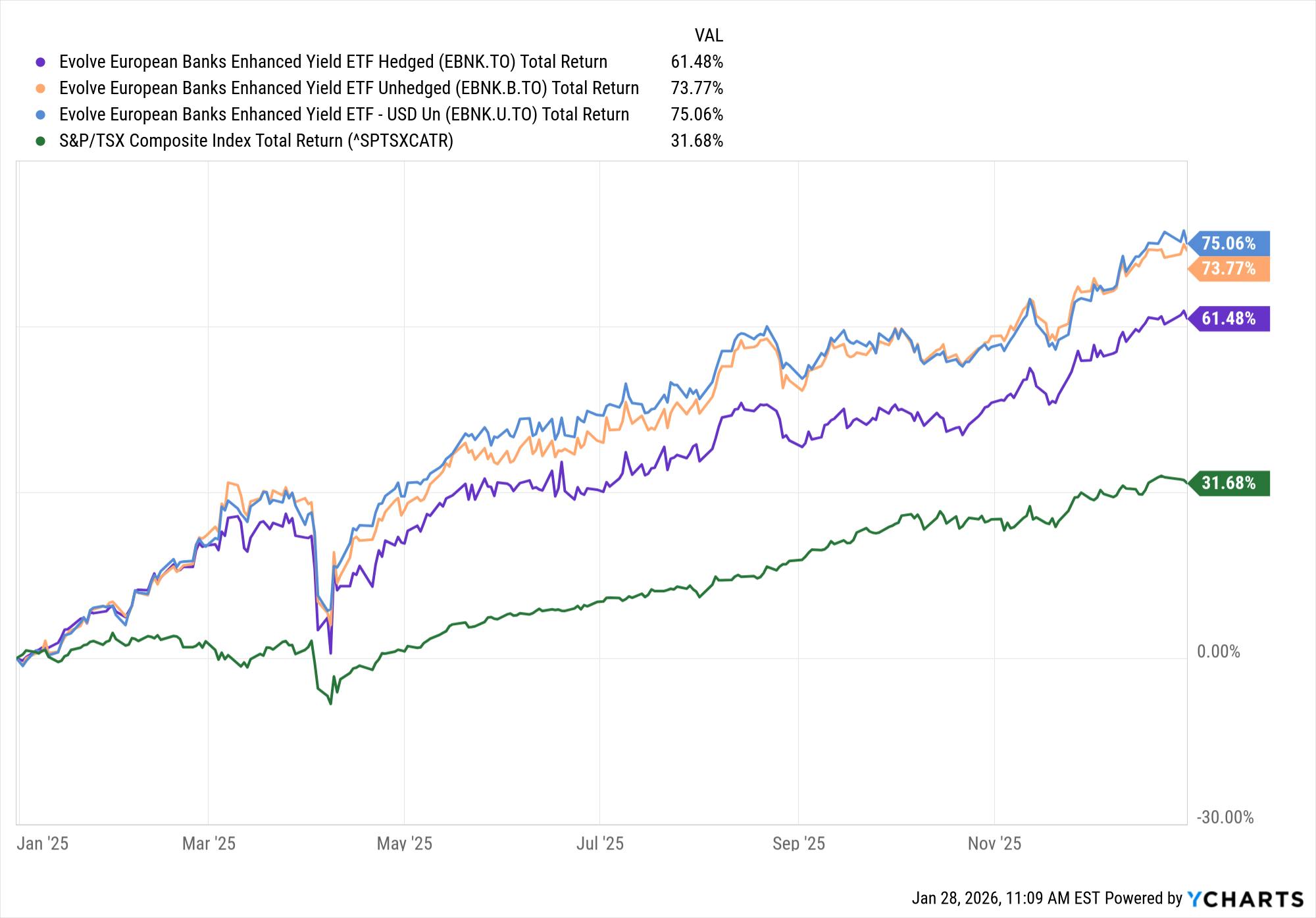
A Look at European Bank Performance
Against an uncertain macroeconomic backdrop, a blend of better-than-expected industry earnings, regional economic optimism and low valuations drew investors to the European banking sector. As noted by Deutsche Bank analysts in a recent STOXX Ltd. memo, European banks have materially improved profitability since the pandemic and have maintained a solid return on tangible equity as interest rates declined. As a reminder, the European Central Bank halted its rate-cutting cycle in June 2025, keeping the deposit facility rate at 2% ever since. While well below the peaks of 2023–24, policy rates stayed comfortably above pre-pandemic norms, allowing eurozone lenders to preserve elevated net interest margins.
As noted in a recent Financial Times article, net interest income is anticipated to rise in 2026 and 2027. This growth is attributed to loan expansion, the use of structural hedging strategies, and differences in the speed at which banks across various European nations gain from increased rates, which should lead to a recovery.
A Look at Long-Term Performance
While last year’s European banking performance was exceptional, it is even more noteworthy over a longer period. Looking at EBNK over a three-year period and comparing it with its US banking-focused counterpart, Evolve US Banks Enhanced Yield Fund (Ticker: CALL/CALL.B/CALL.U), the degree of outperformance is significant.
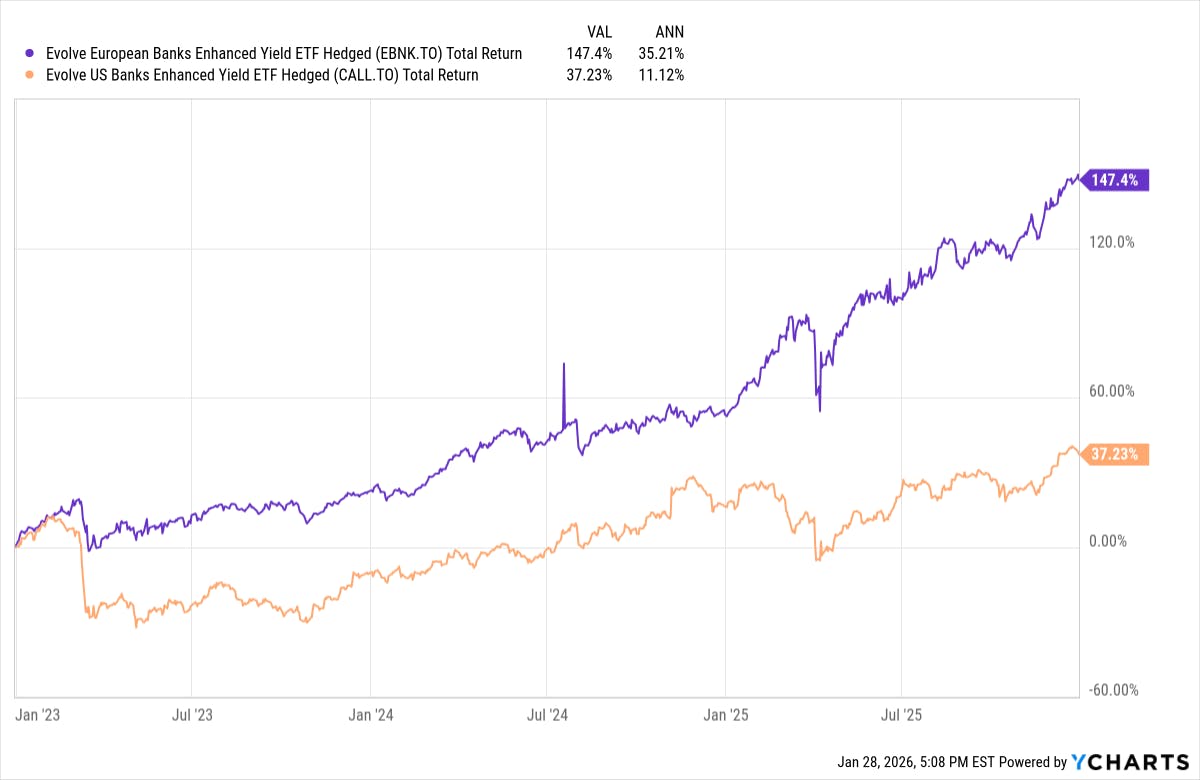
Since central banks began sharply raising interest rates in 2022 to combat rising inflation, European banks have reported increased profits. The rise in lending income from higher rates enabled banks to provide substantial distributions to shareholders. However, even as interest rates began declining in 2024, large banks' profits remained robust, supported by revenue growth driven by effective interest rate risk management, enhanced fee income, and steady lending income. Over the past two years, large European banks have outperformed their US counterparts on average equity returns and average total payout ratios, strengthening the case for European bank equities.
It should be noted that US banking firms recently released their quarterly earnings, and the six largest banks generated a record $593 billion in revenue, with underlying profits rising 8% from the fourth quarter of 2024 to $157 billion. As Jamie Dimon, CEO of JPMorgan Chase, noted regarding his firm’s performance, “The U.S. economy has remained resilient (and) while labor markets have softened, conditions do not appear to be worsening. Meanwhile, consumers continue to spend, and businesses generally remain healthy.” Banks are often seen as a proxy for economic growth, and the strong performance of the largest US banks bodes well for future economic growth.
Takeaway
For investors looking to diversify away from North American equities, European equities offer an opportunity to gain exposure to companies with a distinct value proposition and that cater to international markets. Given the strong performance of European banks in recent years, having exposure to this asset class could be an additive component within one’s portfolio. As such, the Evolve European Banks Enhanced Yield ETF (Ticker: EBNK/EBNK.B/EBNK.U) could be an investment solution worth considering.
Please note this article is for information purposes only and does not in any way constitute investment advice. It is essential that you seek advice from a registered financial professional prior to making any investment decision.