Why Japan ETFs Outperform Amid Political Turmoil
Japanese equities surged 20% YTD, with reforms and services growth offsetting political shifts and U.S. tariffs.


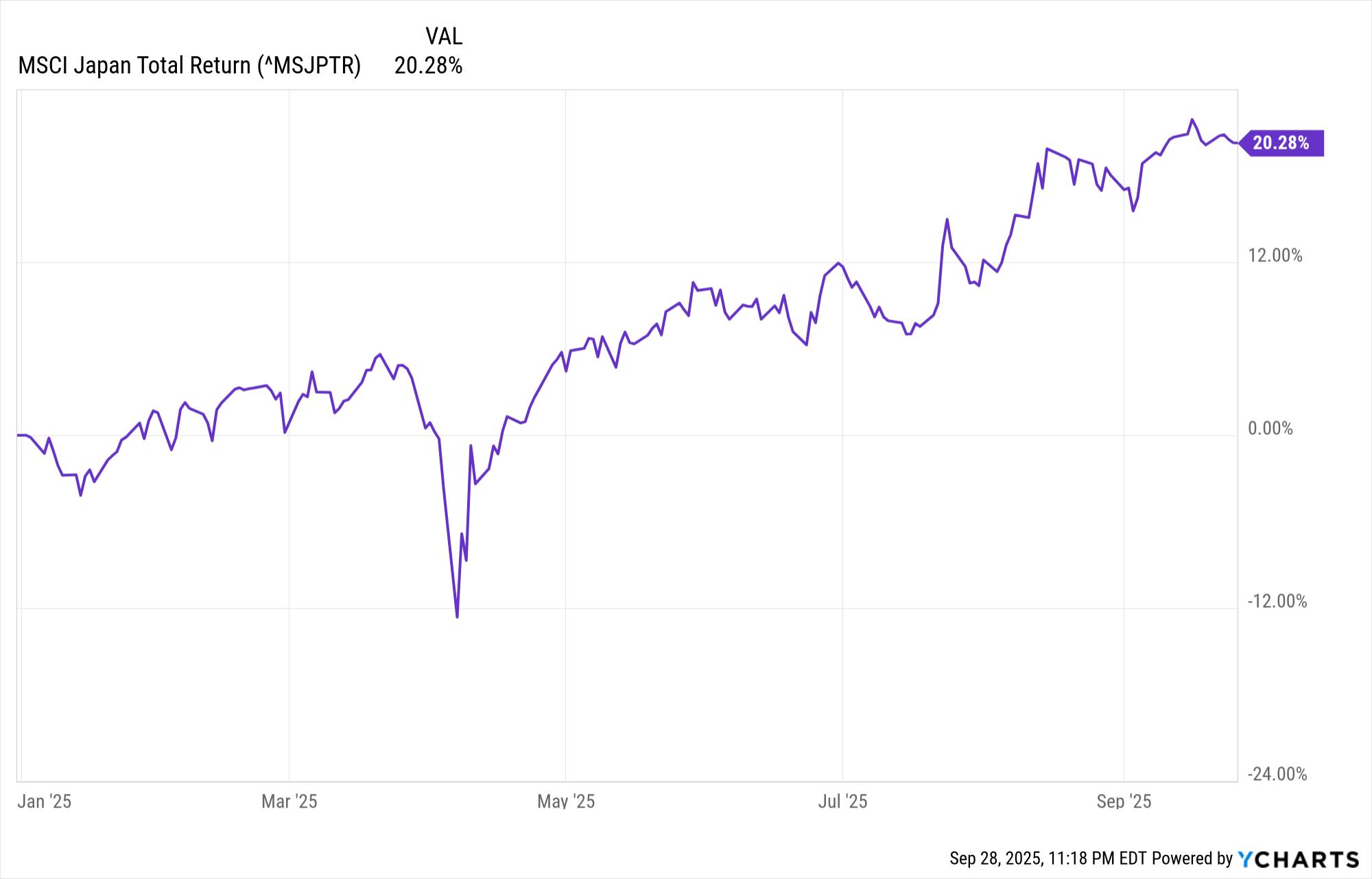
Year-to-date, the performance of Japanese equities has been strong, returning just over 20% based on the MSCI Japan Index. However, the political landscape in Japan has recently shifted, raising questions about its potential impact on the economic environment, if any.
Political Change
On September 7, Japanese Prime Minister Shigeru Ishiba declared his intention to resign amid increasing pressure from within his Liberal Democratic Party (LDP). Since assuming office in October 2024, Ishiba's tenure has seen the LDP lose two national elections, leading to the ruling coalition losing its majority in both parliamentary houses for the first time in 70 years. Ishiba's departure occurs as Japan confronts numerous domestic and international issues, including inflation, a weak yen, U.S. tariffs, and security concerns involving China, North Korea, and Russia.
Insights into Japan’s Economy
Recently, S&P Global published a memo on Japan’s economy, reporting that business activity slowed in September due to a downturn in manufacturing; however, the service sector expanded. The S&P Global Flash Japan PMI Composite Output Index posted 51.1 in September, the sixth consecutive month in which the headline reading remained above the 50.0 neutral mark to signal an expansion of business activity.
The slowdown in the manufacturing sector can be linked to the impact of U.S. tariffs and cautious inventory policies. Although the recent ratification of the tariff policy between the U.S. and Japan established a baseline tariff of 15% on all imports from Japan—including automobiles, auto parts, civil aircraft, and certain other goods—its actual effect on stimulating the manufacturing sector remains uncertain at this time. Conversely, there is a growing expectation that the service sector will expand, as staffing levels in the sector have increased recently in response to higher activity.
Though the Japanese economy is undergoing a shift, as mentioned in an article earlier this year, Japanese companies are also benefiting from a reform agenda that has gained significant momentum this year. Reforms include more active minority shareholders and more oversight of poor-performing management, as well as signs of better capital allocation, including non-core asset disposals, rising buybacks, and dividends. Such measures are helping improve returns on Japanese equities.
Despite the economic shifts occurring, the momentum that has carried Japanese equities forward this year remains in place, with the change in political leadership unlikely to affect this dynamic.
Investing in Japanese Equities
For investors looking to gain exposure to Japanese equities, the following ETF solutions can provide comprehensive exposure:
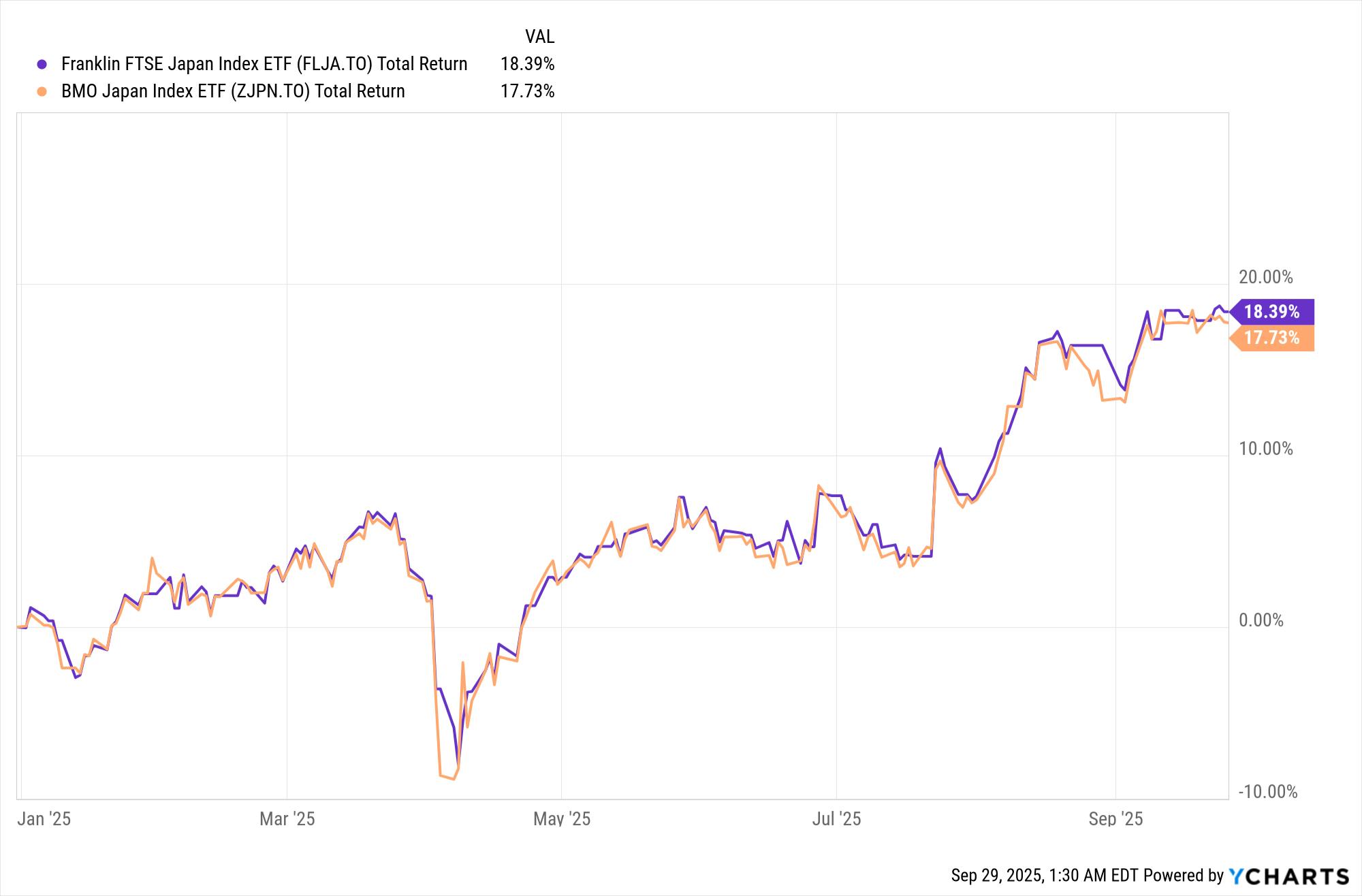
The BMO Japan Index (Tickers: ZJPN/ ZJPN.F) has been designed to replicate the performance of the Solactive GBS Japan Large & Mid Cap Index. The ETF invests in large and mid-cap Japanese companies. The ETF invests in and holds the constituent securities of the index in the same proportion as they are reflected in the index. ZJPN.F is the currency-hedged version of the ETF, while ZJPN is the unhedged version.
The Franklin Templeton Japan Index ETF (Ticker: FLJA) has been designed to replicate the performance of the FTSE Japan Index, which invests, directly or indirectly, primarily in equity securities of large- and mid-capitalization Japanese issuers.
Please note this article is for information purposes only and does not in any way constitute investment advice. It is essential that you seek advice from a registered financial professional prior to making any investment decision.