Equity ETF Markets at Mid-Year 2026: What Drove Performance and What's Next
Halfway through 2026, the headlines promised turbulence, geopolitical shocks, AI disruption, and inflation, yet equities climbed anyway.

With the first half of the 2026 calendar year complete, many individuals are reflecting on what happened and looking ahead to what’s to come. Similarly, investors are assessing the landscape to understand which developments will unfold and how to position their portfolios. In reviewing the first half of the year, investment themes such as Artificial Intelligence (AI) concentration and displacement, geopolitical risk, and inflation dominated headlines and shaped investor sentiment. However, despite the uncertainty these themes may have evoked, the market propelled upward and onward.
Looking Across the Equity Region Landscape
Given the geopolitical developments (i.e., the Iran War/closure of the Strait of Hormuz) at the beginning of March 2026, the positive equity market performance across regions is impressive. As shown in the chart below, Emerging Market equities outperformed all other regions. This is due to the seminal role of both South Korea and Taiwan in the AI ecosystem – and their sizable weight within the index (i.e., MSCI Emerging Markets Equities).
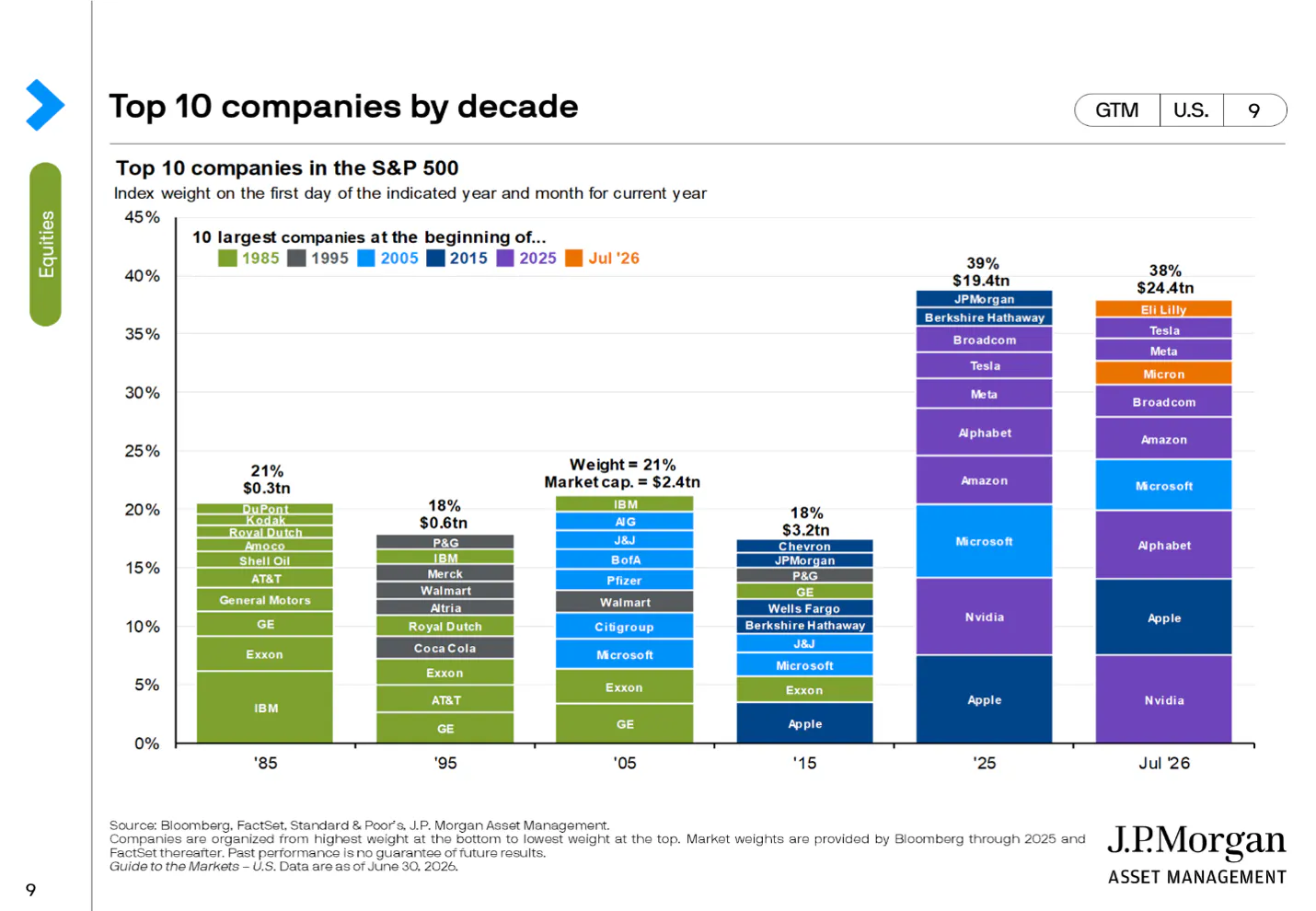
As noted in a previous article, the performance of international equities (i.e., the MSCI EAFE Index) is primarily tied to the economic and capital market reforms underway in Japan. To start the year, US equities were weighed down by the ‘SaaS-apocalypse’ before the Iran Conflict; however, the strong performance of Big Tech propelled the asset class forward by mid-year. The theme of mega-cap tech concentration remains a prevailing topic within US equities and is likely to be a mainstay due to continued investment in AI infrastructure and the upcoming/anticipated initial public offering of Anthropic and OpenAI.
Looking Across the Equity Factor Landscape
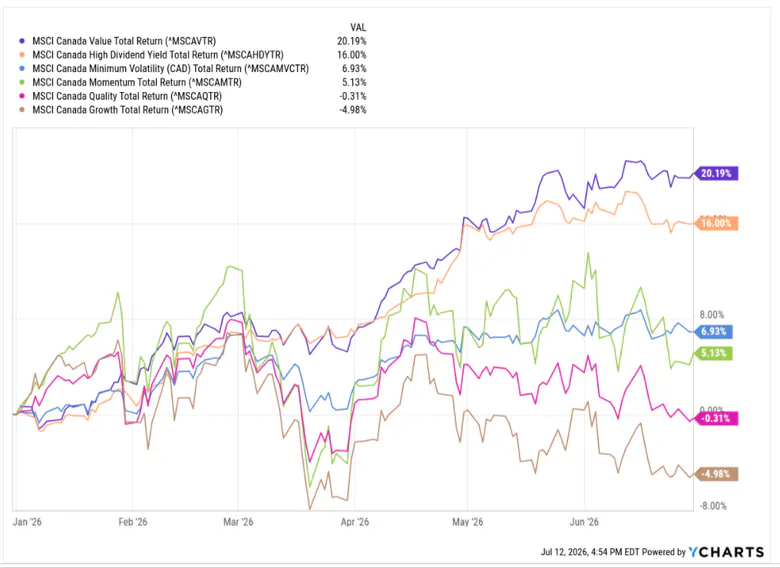
Within the Canadian equity factor landscape, Value has outperformed all other factors, benefiting from exposure to defensive sectors such as Financials, Utilities, Industrials, and Energy. The Energy sector’s strong performance, driven by elevated energy prices stemming from the war, and the Financials sector's strength, supported by robust earnings from Canadian banks, have benefited Canadian Value investors over the period in question. The dividend factor has also rewarded investors, as evidenced by the MSCI Canada High Dividend Yield Index, which has significant exposure to both the Financials and Energy sectors, given that firms within those sectors have a history of paying consistent, growing dividends. Most notably, the performance of the MSCI Canada Growth Index has been negative, driven by the technology sector's underperformance.
Looking Across Equity Market-cap Landscape
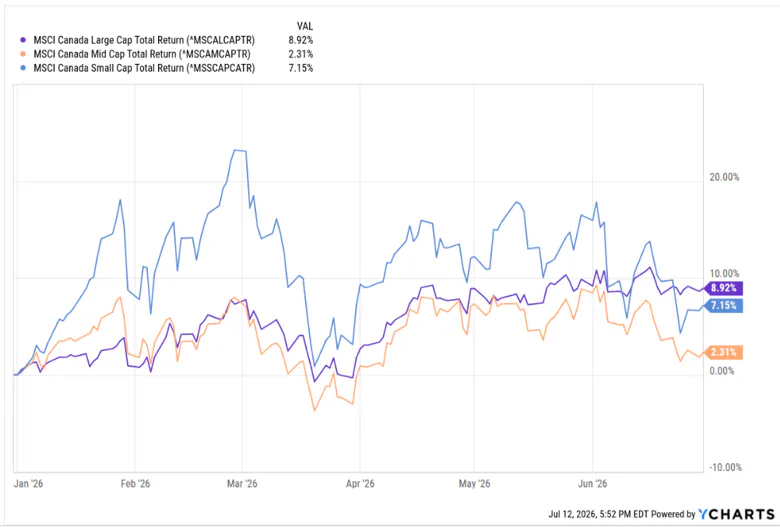
Looking at the Canadian equity market-cap landscape, large-cap equities have performed best and provided a relatively steadier investment experience than mid-cap and small-cap equities. Simply put, investors have found safety in the biggest firms. Canada's small-cap universe has significant exposure to junior mining, oil & gas exploration, and other resource companies. The business outlook indicator survey noted that investment intentions remained resilient, supported by strong commodity prices, particularly in the energy sector, where higher oil prices boosted production and capital spending. However, given the uncertainty surrounding the global economy, the investment experience in small-cap equities is expected to remain volatile. Finally, mid-cap companies lack the resource-sector concentration of small-cap companies and the sector- or industry-level dominance of large-cap firms, leaving them in an uneasy position and more dependent on the domestic market and the economy's direction.
Consequential Developments for the Second Half of 2026
Globally, a resolution regarding the Strait of Hormuz remains consequential, as it affects energy prices and the global economy. At present, hostilities between the US and Iran have risen once more, with the latter declaring the Strait closed once again. With no clarity regarding vessel movement within the sea passage, there will continue to be an ‘uncertainty overhang’ on the global economy, which will adversely impact equity markets.
More regionally, discussion regarding the extension of the Canada-United States-Mexico Agreement (CUSMA) is an important development. The Trump Administration’s desire to renegotiate the deal introduces a measure of economic uncertainty, as operating without a long-term extension complicates long-term business and cross-border planning. This uncertainty can curtail foreign investments and weigh on Canadian GDP growth
Taking an All-In-One Approach
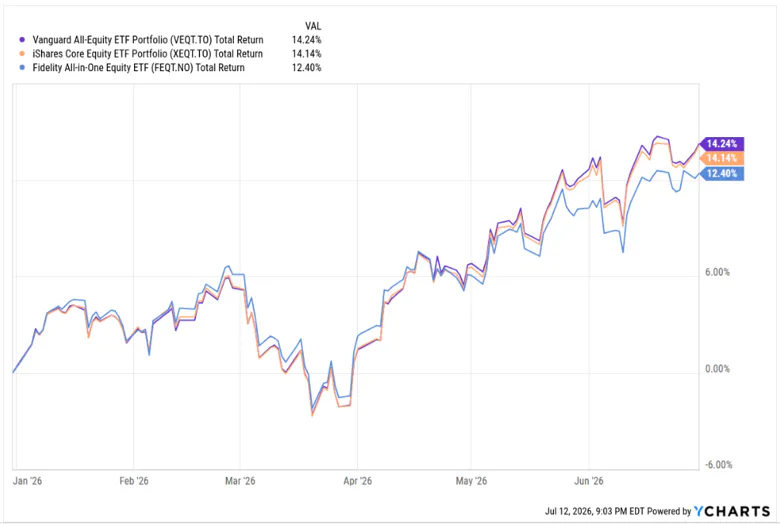
A seminal takeaway from the first half of 2026 is that diversification matters and has beneficially rewarded investors, given the outperformance of Emerging Market and International Equities relative to US Equities.
For Canadian investors seeking comprehensive equity exposure, ETF offerings such as iShares Core Equity ETF Portfolio (Ticker: XEQT), Fidelity All-in-One Equity (Ticker: FEQT), and Vanguard All-Equity ETF Portfolio (Ticker: VEQT) provide diversified equity exposure in a single ticket.
XEQT seeks to provide long-term capital growth by investing primarily in one or more exchange-traded funds managed by BlackRock Canada and is managed in accordance with a long-term strategic asset allocation; the current target weight for each asset class is 25% Canadian equities, 45% U.S. equities, and 25% International Developed Market equities.
FEQT follows a neutral mix guideline of approximately 97% global equity securities and approximately 3% cryptocurrencies. The portfolio will be rebalanced annually. Additionally, if the portfolio deviates from its neutral mix by more than 5% between annual rebalances, the portfolio will also be rebalanced.
VEQT seeks long-term capital growth by primarily investing in equity securities. The sub-advisor will strive to maintain a long-term strategic asset allocation of 100% equity securities. The portfolio asset mix may be reconstituted and rebalanced from time to time at the sub-advisor's discretion.
This article was written on July 12th, 2026. Please note this article is for information purposes only and does not in any way constitute investment advice. It is essential that you seek advice from a registered financial professional prior to making any investment decision.