Taking Interest in Short-Dated Treasury ETFs
Market volatility and trade tensions push investors toward short-term U.S. treasuries, with hedged ETFs offering currency risk control.


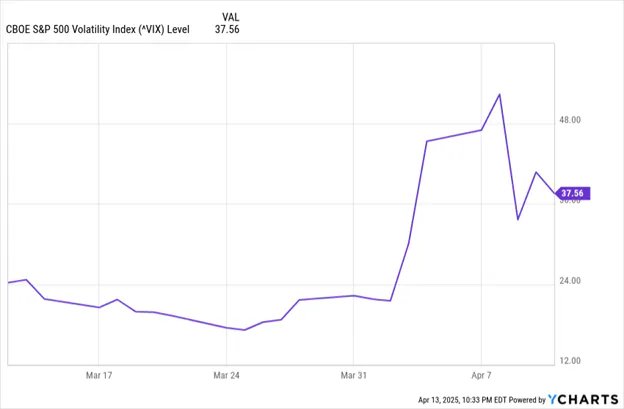
The rise in global market uncertainty in recent weeks has led investors to seek out safe-haven assets. Though President Trump’s April 9th announcement about ‘pausing tariff hikes for 90 days’ was welcomed news to U.S. equity markets, there was no real material change in the trade in outlook for the broader economy – as most countries would be left with 10% tariffs on their exports to the United States. Furthermore, President Trump increased tariffs on Chinese imports, raising them effectively to 145%. The immediate takeaway is that, though trade uncertainty has abated somewhat due to the 90-day pause, we are still nowhere near our previous levels of stability.
A Changing Investment Landscape
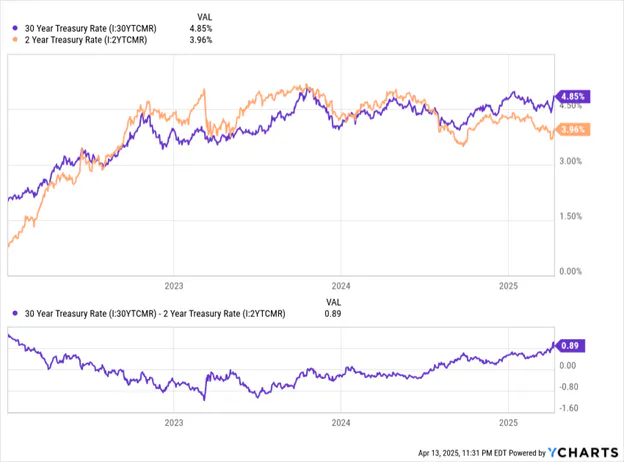
During periods of elevated uncertainty, U.S. treasuries are often seen as a safe haven. However, given that the current market volatility stems from the actions of the presiding U.S. administration, the surety these securities once held may be fading. Against the backdrop of falling U.S. equities, rates on longer-term U.S. debt have increased, on speculation that President Trump’s tariffs will diminish international demand for treasuries at a time when U.S. deficits could rise further with Congress debating tax cuts. Conversely, with worries around the growth of the U.S. economy, shorter maturities fared better versus longer-dated debt because of expectations that the Federal Reserve may lower interest rates. Short-term treasuries are more responsive to short-term economic conditions and rate hikes/cuts. Other factors contributing to the significant sell-off in longer maturities last week was speculation that hedge funds were reversing leveraged trades or that banks were selling off debt to generate cash for clients’ liquidity demands as the trade war worsened the corporate outlook.
Investing in Short-Dated U.S. Treasuries
For Canadian investors seeking exposure to short-term U.S. treasuries, several ETFs provide said exposure. It is worth noting that many of these ETFs have USD currency or currency-hedged offerings.
Generally, when an ETF is Hedged to CAD, its portfolio managers use a tool called a “currency forward” to lock in a specific exchange rate on a future date. For Canadian ETFs holding U.S. securities, if the USD has fallen by that date, the ETF makes a gain from the contract, which offsets the value it lost from a falling USD on the portfolio holdings. If the USD has risen, the ETF nets a loss from the contract, which also offsets the value it gained from the rising USD.
In short, during any period when the CAD rises in value relative to foreign currencies, a hedged ETF will result in higher returns in the foreign equity part of the investments. When the CAD loses value relative to foreign currencies, an unhedged ETF usually performs better.
The goal of currency hedging is not to maximize returns but to reduce the impact of currency risk as much as possible.
For Canadian Investors, both iShares and BMO have ETFs with a short-term U.S. treasury focus, namely:
iShares 0-5 Year TIPS Bond Index ETF (Ticker: XSTP/XSTH/XSTP.U) seeks to provide income by replicating, to the extent possible, the performance of an index composed of inflation-indexed U.S. Treasury bonds with remaining maturities of less than five years. The current index for the ETF is the ICE US Treasury 0-5 Year Inflation Linked Bond Index.
BMO Short-Term US Tips Index ETF (Tickers: ZTIP/ZTIP.F/ZTIP.U) has been designed to replicate the performance of the Bloomberg U.S. Government Inflation-Linked 0-5 Year Bond Index. The Fund invests in U.S. Treasury Inflation Protected Securities (TIPS) with a term to maturity of less than 5 years. Securities held in the Index are generally issued or guaranteed by the U.S. Treasury.
BMO Short-Term US Treasury Bond Index ETF (Tickers: ZTS/ZTS.U) has been designed to replicate the performance of the Bloomberg U.S. Treasury 1 – 5 Year Bond Index. The Fund invests in a variety of U.S. Treasuries primarily with a term to maturity between one and five years.
Please note this article is for information purposes only and does not in any way constitute investment advice. It is essential that you seek advice from a registered financial professional prior to making any investment decision.