These 3 Infrastructure ETFs Tap Into a $106 Trillion Opportunity
A massive infrastructure buildout is underway, and ETFs are how investors can access it today.

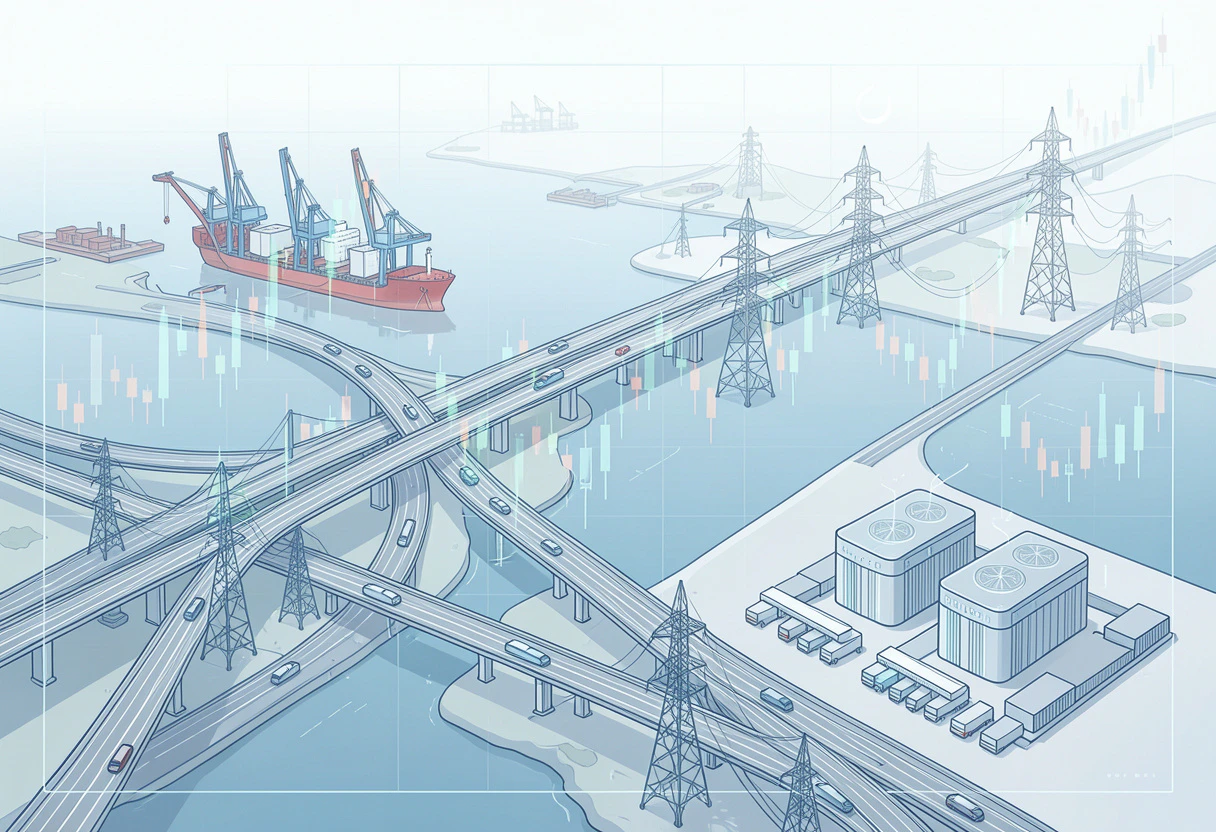
The importance of effective infrastructure in advancing a nation’s economic agenda is often underappreciated, although broadly recognized as essential. In continuing to promote the agenda of building a stronger and more resilient Canada, the Carney Government recently announced a new initiative to develop and protect the nation’s northern region. As stated in the issued memo, the Federal Government will allocate more than $40 billion, including over $35 billion in federal investments, to defend, develop, and transform Canada’s Northern and Arctic region, along with major projects worth approximately $10 billion in investment.
The project deliverables include expanding military facilities in Canada’s Northern Territories, constructing a new highway (i.e., Mackenzie Valley Highway) to connect Yellowknife to Inuvik, and opening up commercial opportunities along the route. It also involves establishing a new port and economic corridor (i.e., Grays Bay Road and Port and the Arctic Economic and Security Corridor), as well as expanding a hydroelectric plant (i.e., Taltson Hydro Expansion Project).
The diverse nature of the projects to ‘Transform the North’ underscores how vast the infrastructure opportunity set is, and why the asset class should be a top-of-mind consideration for investors as they build out their portfolio.
Infrastructure: The Opportunity in an Evolving Asset Class
As detailed in a recent research report from McKinsey, the infrastructure asset class is expanding to include modern technologies and future innovations. While traditional offerings such as power grids, roads, ports, and bridges often come to mind when considering infrastructure investment, technological advancements have made assets like fibre-optic networks, hyperscale data centres, and electric-vehicle charging stations increasingly vital. These modern types of infrastructure share traits with “traditional” infrastructure, including long lifespans, significant initial investment, predictable and resilient cash flows, and critical economic roles.
The evolution of the asset class brings with it newfound opportunities. As noted by McKinsey, a cumulative $106 trillion in investment will be necessary through 2040 to meet the need for new and updated infrastructure. Investment needs cover seven key infrastructure sectors, with transport and logistics demanding the biggest portion ($36 trillion), then energy and power ($23 trillion), digital infrastructure ($19 trillion), social infrastructure ($16 trillion), waste and water systems ($6 trillion), agriculture ($5 trillion), and defense ($2 trillion).
For investors, the expansion of the asset class means a wider opportunity set than in prior decades, allowing early entry into new verticals with long service lives, sources of wealth generation, and high, useful economic value across changing market cycles.
Investing in Infrastructure via ETFs
For Canadian investors looking to gain exposure to the infrastructure asset class, there are turnkey ETFs that offer that exposure while also providing a thematic angle.
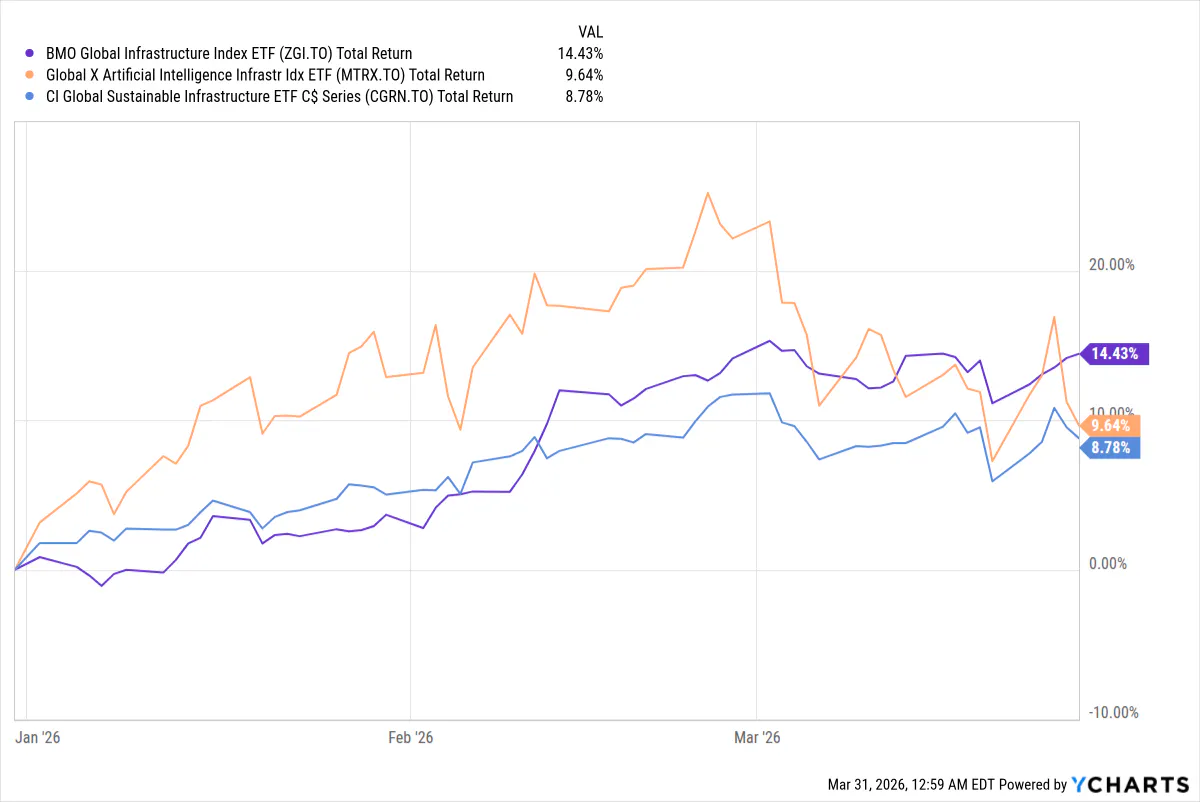
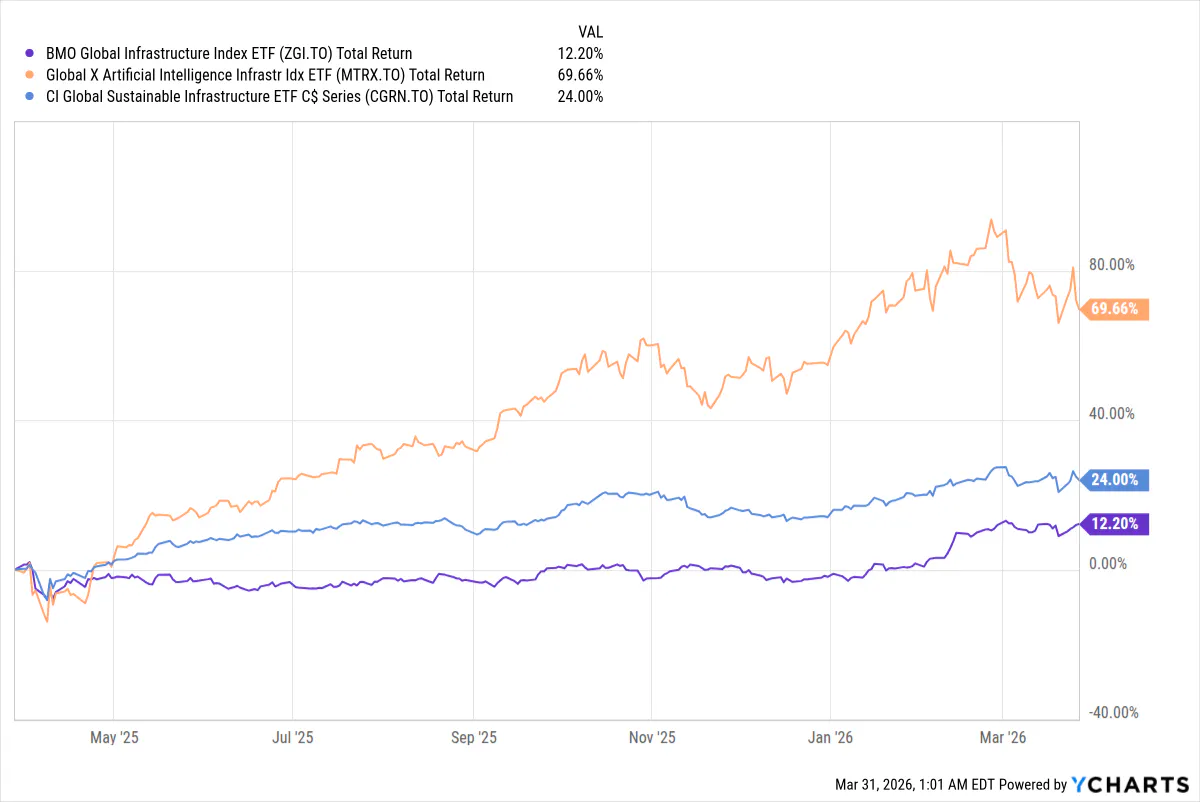
For investors seeking a sustainable, focused infrastructure solution, the CI Global Sustainable Infrastructure Fund (Ticker: CGRN/CGRN.U) offers broad exposure to sustainable infrastructure projects worldwide. This ETF emphasizes integrating environmental, social, and governance factors into its investment strategy, which forms the basis for selecting companies for inclusion in the fund. The investment strategy includes many sustainable infrastructure projects, from renewable energy to water management and green building technologies.
The proliferation of Artificial Intelligence has brought with it an expansive ecosystem of technological opportunity. The Global X Artificial Intelligence Infrastructure Index ETF (Ticker: MTRX) allows investors to gain exposure to various aspects of AI development, from power, energy, and raw materials supply and management to hyper-scaling data center operators —critical to supporting the growing demand for AI applications.
For a more traditionally focused infrastructure offering, the BMO Global Infrastructure Index ETF (Ticker: ZGI) seeks to replicate the performance of the Dow Jones Brookfield Global Infrastructure North American Listed Index, which tracks companies worldwide that own and operate pure-play infrastructure assets. Inclusion in the index requires securities to have a minimum float-adjusted market capitalization of US$500 million and for more than 70% of estimated cash flows to be derived from pure-play infrastructure assets.
This article was written on March 30th, 2026. Please note this article is for information purposes only and does not in any way constitute investment advice. It is essential that you seek advice from a registered financial professional prior to making any investment decision.