War-Ready ETFs: Preparing for Middle East Hostilities
The escalating conflict in the Middle East is transforming the landscape of asset classes, putting several ETFs in the spotlight.

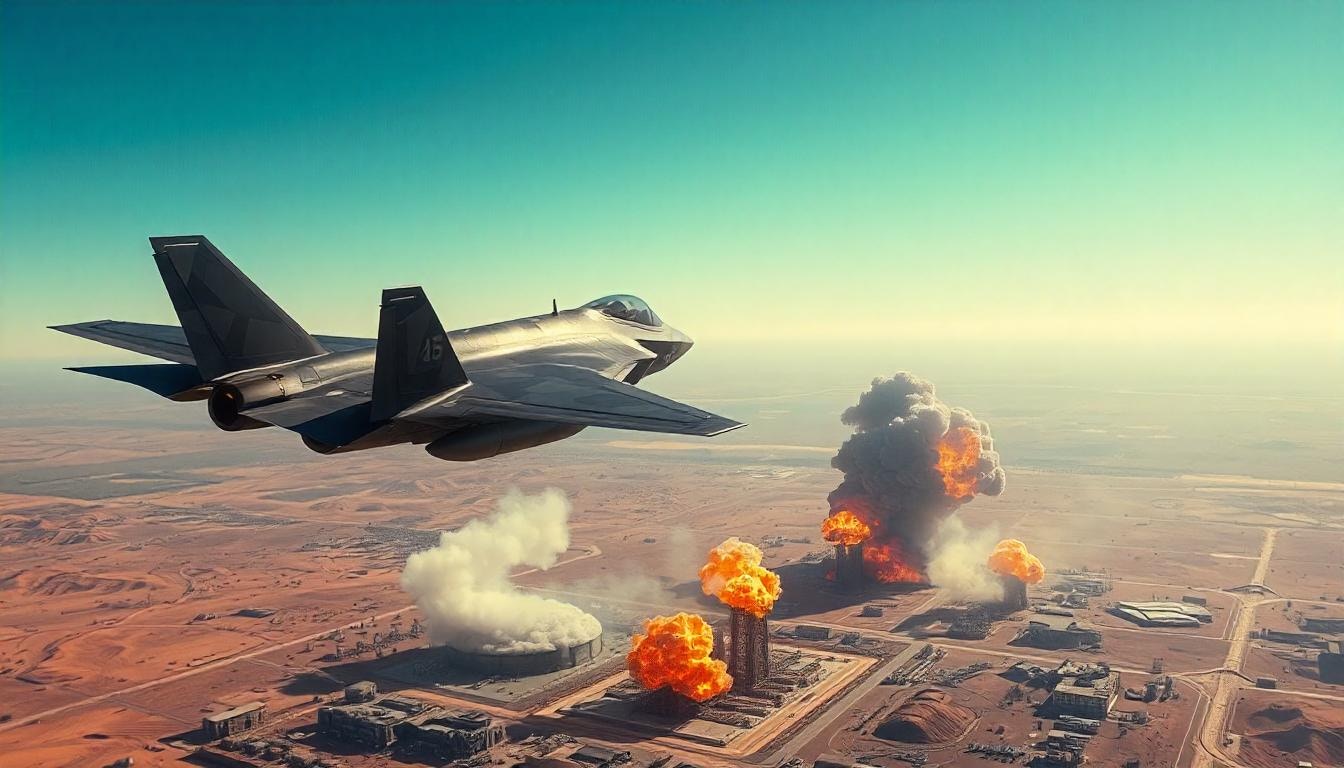
With Monday, October 7th, 2024, marking one year since the Israel-Hamas war began, Iran's recent involvement in the conflict raises uncertainty regarding how far-reaching and prolonged this conflict will be. Against the backdrop of this Middle Eastern conflict, knock-on effects are manifesting in the investment landscape.
A Look At The Energy Sector
The effects of the conflict have been most evident in the energy sector's performance, which has exhibited the strongest performance amongst all sectors over the past two weeks.
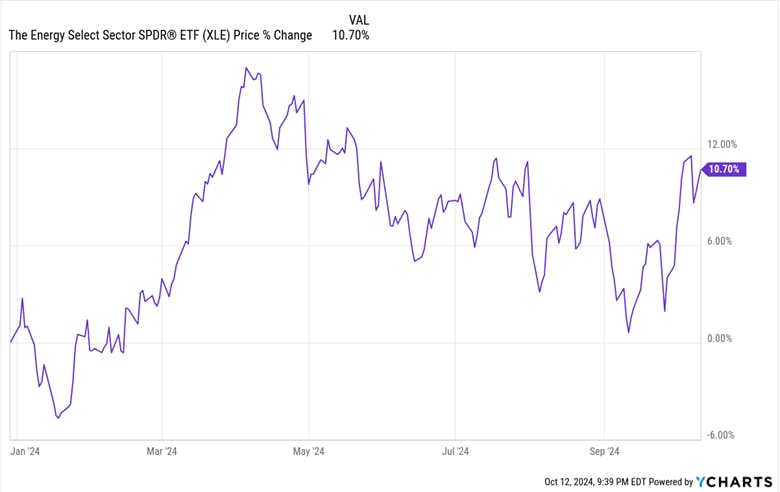
The energy sector's uptick is particularly notable when looking at its year-to-date performance. As illustrated in the following chart, the performance trajectory was downward after April 4th, 2024. While oil prices were high at the start of the year, they began declining during summer. Furthermore, for Q2-2024, the energy sector reported the third largest (year-over-year) earnings decline of all eleven sectors. The recent announcement by Saudi Arabia to increase production in December 2024 also impacted markets, as it was a notable departure from their earlier target of $100 per barrel, sparking a sell-off in oil and energy ETFs.
The Iranian Turning Point
There is a growing possibility that Israel may target Iranian oil facilities, potentially disrupting Iran's upstream production recovery. Iran, a major supplier to China, has a refining capacity of approximately 2.4 million barrels per day. Iran is also a member of OPEC; it is estimated that as much as 4% of the world's supply could be at risk if Iran's oil infrastructure becomes a target for Israel.
The Takeaway
Within investing, “Event Risk” refers to any unforeseen or unexpected occurrence that can cause losses for investors or other stakeholders in a company or investment. If the current Middle East conflict escalates further, impacting the oil supply, it is anticipated that the energy sector will move much higher. In such a scenario, Canadian investors with exposure to the energy ETFs, such as the iShares S&P/TSX Capped Energy Index (Ticker: XEG), Ninepoint Energy Fund (Tickers: NNRG/NNRG.U), and BMO Equal Weight Oil & Gas Index ETF (Ticker: ZEO) will see an uptick in performance due to the supply implications of said event.
As mentioned in a previous article, the financial and energy sectors heavily influence Canada's economy. For investors to gain exposure to the energy sector but still maintain some diversification, ETF solutions such as the Vanguard FTSE Canada All Cap Index ETF (Ticker: VCN) and CI Morningstar Canada Momentum Index ETF (Ticker: WXM) are worth consideration, given their energy sector allocation (i.e., VCN: 17.1% and WXM: 19.14% as of August 2024), while still maintaining exposure to other segments of the Canadian economy.
Finally, a full-out war will require armaments, and the U.S. government, among other nations, is an ally of Israel. One ETF solution that provides exposure to the U.S. military-defense industrial complex is the iShares U.S. Aerospace & Defense Index ETF (Ticker: XAD), which is comprised of manufacturers, assemblers and distributors of aircraft and aircraft parts primarily used in commercial or private air transport and producers of components and equipment for the defense industry, including military aircraft, radar equipment and weapons. The fund tracks the Dow Jones U.S. Select Aerospace & Defense Index. As reported by Reuters, President Joe Biden directed the U.S. military to aid Israel's defense against Iranian attacks and shoot down missiles targeting Israel. It is assumed that U.S. military and defense involvement will be a part of any further action taken if the conflict continues.
Please note this article is for information purposes only and does not in any way constitute investment advice. It is essential that you seek advice from a registered financial professional prior to making any investment decision.