Rates Up, Spreads Tight: The Case for Active Short-Duration Fixed Income
As the Bank of Canada resumes rate hikes and credit spreads sit near multi-year lows, Franklin Templeton’s Dave Andrews explains how active management and short-duration ETFs such as FHIS and FLSD can help advisors navigate fixed income.


After more than three years without a rate increase, the Bank of Canada lifted its policy rate by 25 basis points to 2.50% on October 28, 2026, its first hike since July 2023. For fixed income investors, the move lands in an unusual setting: yields have moved higher, while Canadian corporate credit spreads remain near multi-year lows.
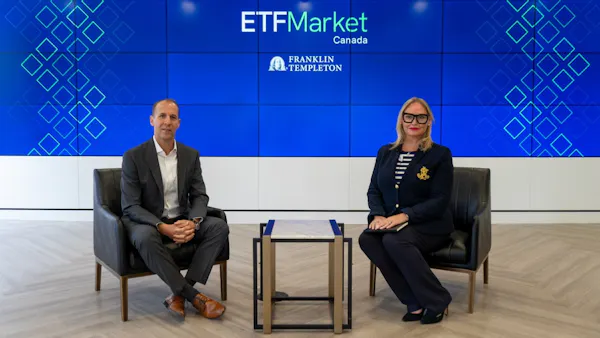
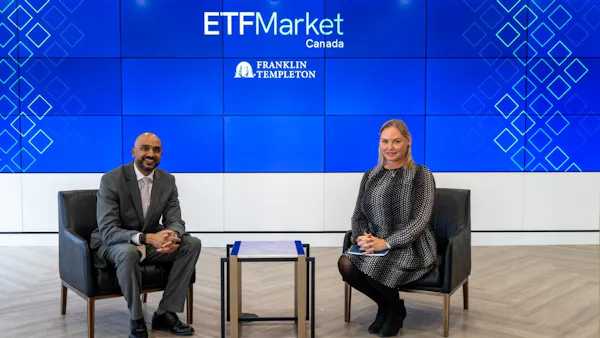
In the latest episode of Issuer Insights from ETF Market Canada, Dave Andrews, VP and Senior Client Portfolio Manager at Franklin Templeton Fixed Income, discusses what this environment means for advisors, where active management can add value, and how two of the firm’s short-duration ETFs fit into a portfolio.
A cautious hike, and a case for patience
Andrews sees the Bank’s decision as largely priced in. Viewed in isolation, he argues, Canada’s domestic picture offered little justification for a hike, but the Bank operates within a global network of central banks and appears to have acted “with a little bit of trepidation,” delivering what he describes as a dovish hike.
His first message to advisors is not to panic. He expects more rate volatility ahead and, with spreads this tight, warns against making large bets on either duration or credit at this stage.
There is a constructive side. In his view, bonds are once again doing what they have historically done, paying investors meaningful interest income, while also showing negative correlation with equities for the first time in a long while. That combination, he notes, strengthens the role of fixed income in a multi-asset portfolio.
Three levers for active managers
Andrews identifies three ways an active fixed income manager can add value. The first is allocation: choosing between government and corporate debt and, within corporates, between investment grade and high yield. He describes this decision as a significant driver of relative performance for Franklin Templeton’s products.
The second is security selection, where avoidance matters as much as inclusion. Knowing which corporate bonds not to hold, he says, is just as important as choosing which ones to own. The third is yield curve positioning: deciding whether to sit at the short, middle or long end, each with a distinct risk profile.
The third quarter tested all three. Rates were rising while spreads stayed tight, leaving little cushion if a credit decision went wrong. Andrews calls the environment “precarious,” one that requires an open mind, a focus on quality and liquidity, and readiness to adjust duration quickly, as market moves in October have illustrated.
Getting paid for credit risk
With Canadian corporate spreads near multi-year tights, Andrews urges advisors to separate a bond’s total yield from the compensation it offers specifically for credit risk. When spreads are this narrow, investors earn relatively little extra for taking on issuer risk.
The response, in his view, is disciplined credit research and a deep team able to distinguish “the princes from the frogs.”
FHIS: a first step beyond cash
For investors looking to put cash to work while keeping capital preservation in mind, Andrews positions the Franklin Canadian Ultra Short Term Bond Fund (FHIS) as a bridge between cash and more traditional core fixed income.
The strategy pursues two objectives: generating income above what cash balances typically earn, and doing so with limited exposure to rate volatility. Andrews sees it as a natural fit for clients moving out of cash or GICs who want additional income without taking on significant interest rate risk. He adds that this segment of the curve has rewarded investors with considerably less volatility than longer-duration strategies.
As of September 30, 2026, FHIS had an effective duration of 0.72 years, an MER of 0.17% and a Low risk classification.
FLSD: the next step along the curve
The Franklin Canadian Short Term Bond Fund (FLSD) extends one step further, offering additional yield over the ultra-short strategy with added but still moderate duration risk. Andrews describes it as a “best of both worlds” option, filling the gap between ultra-short exposure and Franklin Templeton’s longer core plus strategies, with active management throughout.
As of the same date, FLSD had an effective duration of 3.07 years, an MER of 0.33% and a Low risk classification.
Why active, why now
Andrews’ closing argument centers on flexibility. With rates moving quickly and spreads leaving little room for error, he sees the current environment as a critical time for active managers, with opportunities both now and going forward.
For advisors reassessing fixed income after the Bank of Canada’s latest move, FHIS and FLSD offer two actively managed options at the short end of the curve, each with a different balance of income and rate sensitivity.
Fund data source: Franklin Templeton fund factsheets, as of September 30, 2026. Yield to maturity is calculated without the deduction of fees and expenses and should not be used as an indication of the income that has been or will be received.
Please note this article is for information purposes only and does not in any way constitute investment advice. It is essential that you seek advice from a registered financial professional prior to making any investment decision.
Important legal information
Commissions, trailing commissions, management fees, brokerage fees and expenses may be associated with investments in mutual funds. Please read the prospectus and fund fact document before investing. Mutual funds are not guaranteed. Their values change frequently. Past performance may not be repeated.
The views expressed are those of the investment manager and the comments, opinions and analyses are rendered as at publication date and may change without notice. The underlying assumptions and these views are subject to change based on market and other conditions and may differ from other portfolio managers or of the firm as a whole. The information provided in this material is not intended as a complete analysis of every material fact regarding any country, region or market. There is no assurance that any prediction, projection or forecast on the economy, stock market, bond market or the economic trends of the markets will be realized. The value of investments and the income from them can go down as well as up and you may not get back the full amount that you invested. Past performance is not necessarily indicative nor a guarantee of future performance. All investments involve risks, including possible loss of principal.
Franklin Templeton and Franklin Templeton Canada are business names used by Franklin Templeton Investments Corp.
Issued by Franklin Templeton Investments Corp., 200 King Street West, Suite 1400 Toronto, ON, M5H3T4, Fax: (416) 364-1163, (800) 387-0830, www.franklintempleton.ca