The Blue Wave and AI: What the Midterms Mean for ETF Investors
A Democratic sweep in Washington and statehouses has put data centre buildouts in the political crosshairs. Here is what it means for AI exposure.


While the recent U.S. midterm election outcome was expected, the margin of victory surprised many. In the post-election landscape, Democrats secured control of both chambers of Congress and won gubernatorial races in traditionally Republican states. The change raises new questions about near-term policy developments, particularly regarding AI development.
A Stark Change in Sentiment
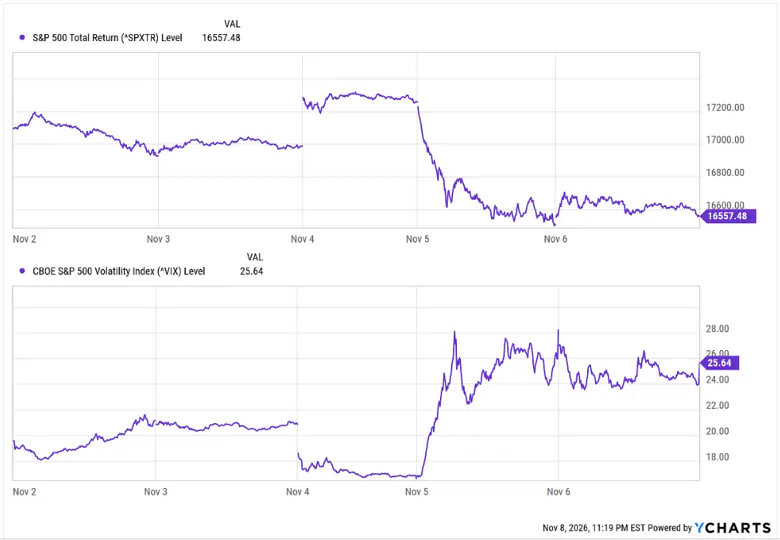
The post-election euphoria was short-lived, as Friday's market drawdown reflected a sentiment shift driven by the Democratic Party’s potential to introduce legislation that would slow the pace of AI Infrastructure development. As evidenced by the stark rise in the Cboe Volatility Index, there is a prevailing belief that ‘change in power’ between the parties will have a material, adverse impact on firms within the AI ecosystem.
Decisions governing data centre projects—including grid interconnection, electricity rate structures for large users, site selection and tax abatements—are largely set by state utility commissions, legislatures and county boards. Anti-data centre rhetoric was a core message in many campaigns, including that of Gina Hinojosa, Texas governor-elect, who has advocated a moratorium on data centre buildouts. As she and other politicians with similar positions take office, the likelihood of project delays has increased. However, although these developments could weigh on near-term AI sentiment, AI spending and development will continue in the long term.
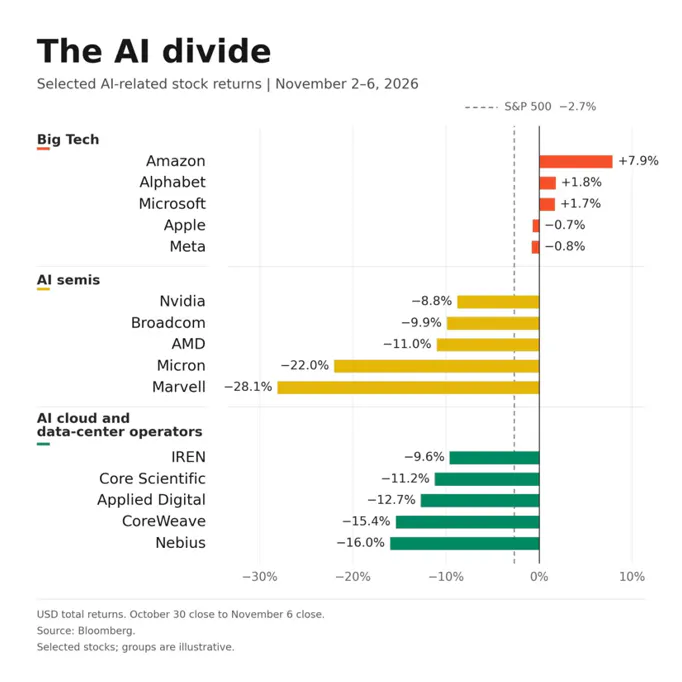
Against this backdrop, when looking at distinct stakeholders or groupings within the AI ecosystem, Big Tech's performance fared relatively well compared with semiconductor firms and neocloud providers. The prevailing view is that Big Tech firms are multi-service entities that are not wholly dependent on AI investment and development for the continuity of their business.
Broadening One’s AI Exposure through International Equities
Despite the current shift in U.S. sentiment towards companies involved in AI development, driven by the political turnover that has occurred, spending will continue, boosting corporate earnings and supporting stock markets worldwide, including in Europe and emerging markets. Given this reality, Canadian investors could use international-focused solutions that provide exposure to some of the seminal players within the AI ecosystem, while also benefiting from exposure to other high-quality firms.
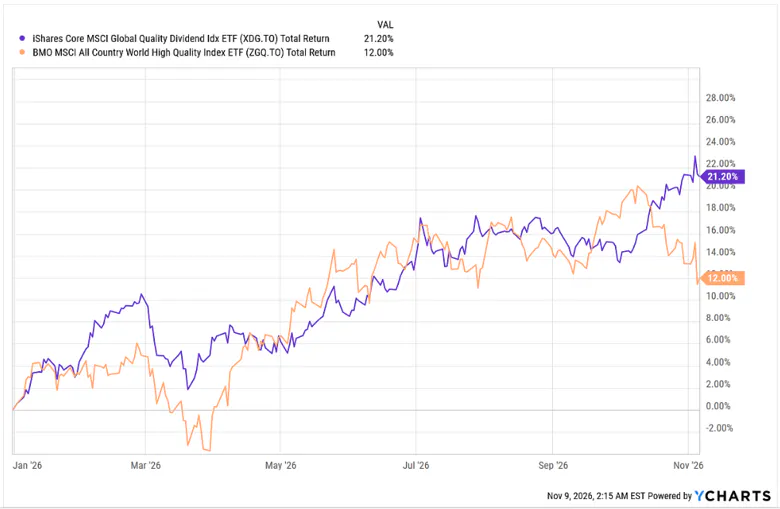
Both the iShares Core MSCI Global Quality Dividend Index ETF (Tickers: XDG/XDGH/XDG.U) and the BMO MSCI All Country World High Quality Index ETF (Ticker: ZGQ) are ETFs that hold companies involved in AI development, along with quality companies in other industries.
XDG replicates the performance of the MSCI World High Dividend Yield Index and holds global stocks with above-average dividend yields and steady or increasing dividends. In terms of technology exposure, Texas Instruments (Ticker: TXN), International Business Machines (Ticker: IBM), and Qualcomm (Ticker: QCOM) are among the notable holdings.
ZGQ replicates the performance of the MSCI All Country World High-Quality Index, reflecting companies with high return on equity (ROE), stable year-over-year earnings growth and low financial leverage. Regarding the fund’s technology exposure, Microsoft Corporation (Ticker: MSFT), Apple Inc. (Ticker: AAPL), Taiwan Semiconductor Manufacturing Co. Ltd. (Ticker: TWD), Meta Platforms, Inc. (Ticker: META), NVIDIA Corporation (Ticker: NVDA), and Broadcom Inc. (Ticker: AVGO) are holdings.
This article was written on November 9th, 2026. Please note this article is for information purposes only and does not in any way constitute investment advice. It is essential that you seek advice from a registered financial professional prior to making any investment decision.