Investing in Commodities ETFs: The Play of 2023 and Beyond
Explore factors to consider before investing in commodities such as the global economic forecast, interest rate forecasts, and technological advancements.


An allocation to commodities can serve investors in many ways – as a potential inflation hedge, an effective portfolio diversifier - thanks to the low correlation with traditional financial markets – or simply as a source of excess positive returns.
My previous article explores these benefits in more detail and reviews the different types of commodities, so take a read if you’d like a refresher. Today, I’m taking a closer look at three important factors to consider before investing in commodities - to help determine whether this is the right time to invest, and if so, what commodities are likely to outperform. Let’s dive in.
1. The global economic forecast
It is often said that equity markets do not reflect the economic reality they are subject to, particularly in low-interest environments. Leverage, market psychology, and a myriad of other factors often distort pricing mechanisms and can leave investors wondering if the next rate hike will signal confidence in the economy and lead markets higher, or cause sell-offs on fears of higher debt servicing costs for market participants.
Although commodities are not immune to irrational behavior, their prices are much more closely tied to economic fundamentals as they are required by an economy to actually produce goods and services. Therefore, the dynamics of supply and demand seem to have a larger influence over their prices.
Hard commodities
Hard commodities, in particular, are very much tied to economic cycles, and dependent on demand from a few large market participants. Typically, these participants are industrial powerhouses, such as China, India, and the U.S. Therefore, the economic forecasts of these three countries (particularly China) will often impact the prices of hard commodities such as energy products and industrial metals. Investors should keep an eye on the global economy and China’s growth forecast as an indicator of the demand for industrial metals and oil.
Soft commodities
Soft commodities such as agricultural products and livestock have a somewhat inelastic demand, which can be translated as follows: people will always need to eat; meaning demand is a lot more stable and predictable. After all, a large portion of our current inflation has come from food prices.
In comparison to minerals or energy, their prices don’t rely as much on the economic cycle, but rather on supply shocks. A conflict in a country whose main export is wheat will affect the price much more than recessionary fears. As an example, we can look at the price of wheat before, and after, the war in Ukraine had started:
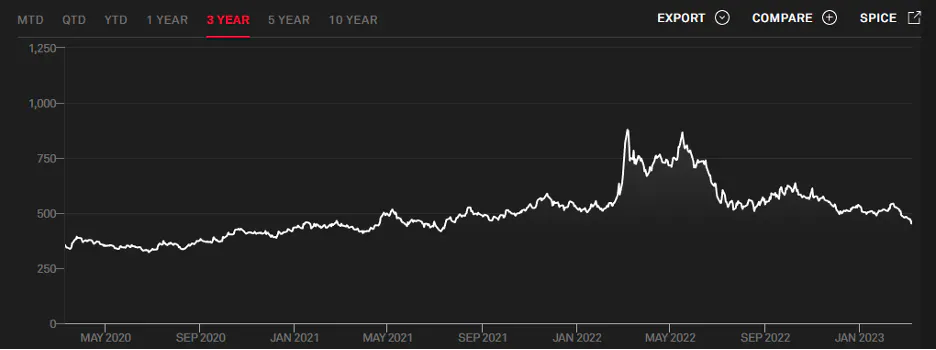
Figure 1: S&P GSCI Wheat
Similarly, the supply disruptions in lumber mill operations caused by COVID-19 also resulted in a noticeable increase in lumber prices, which have only recently returned to pre-pandemic levels:
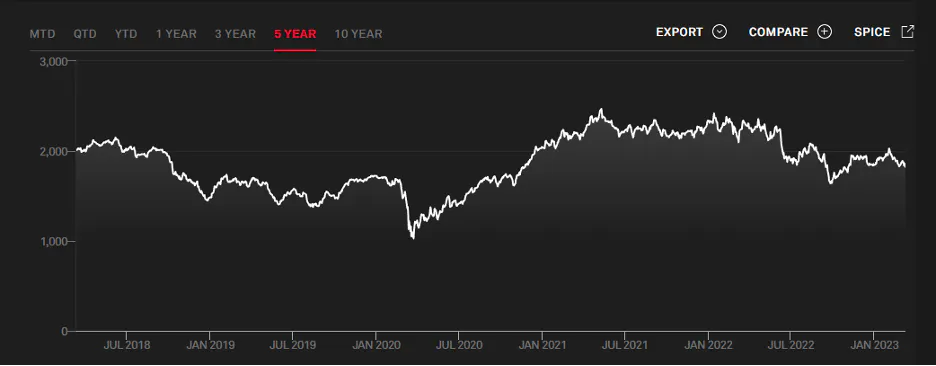
Figure 2: S&P Global Timber & Forestry Index
2. Interest Rate forecasts
The relationship between interest rates and commodity prices is a little complicated and can vary depending on the commodity and the reason behind the interest rate decisions. As quoted in the previous article in this series, commodities seem to outperform asset classes in the Late Expansion and Early Recession stages of the business cycle, which are often characterized by peak interest rates, with a possibility of rate cuts in the future as the economy slows:
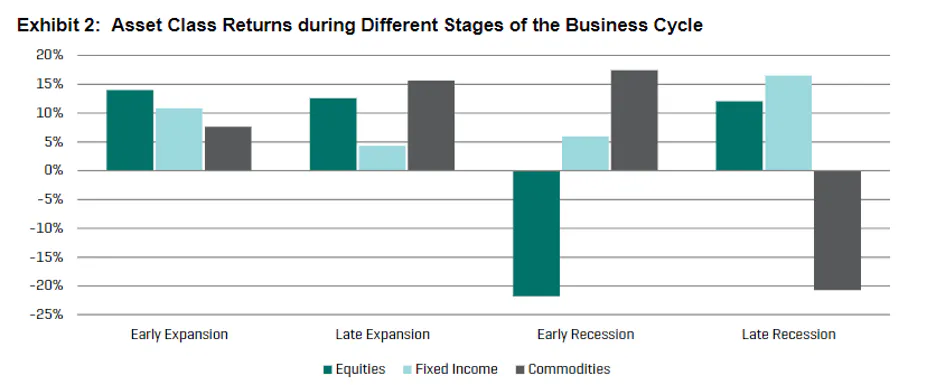
Figure 3: COMMODITY INVESTMENTS: THE MISSING PIECE OF THE PORTFOLIO PUZZLE? - Xiaowei Kang, CFA
Therefore, investors can reasonably assume that commodities perform well in an environment where interest rates are unlikely to continue higher, and have a reasonable chance of heading lower.
3. Technological Advancements
Advancements in technology are another important factor when trying to determine the direction of Commodity prices.
Consider a more efficient mining process that allows for faster or higher quality ore extraction at a copper mine. This would likely act as a positive supply shock and increase the production rates of copper. The effect on copper prices would likely be negative.
At the same time, advancements in automotive engineering resulting in the mass adoption of electric vehicles would act as a positive demand shock for copper and rare earth metals. This would likely lead to higher prices over the long term.
Similar arguments can be made for advancements that allow for higher crop yields, or perhaps the mass adoption of lab-grown meats or meat alternatives. These factors would likely affect the supply and demand dynamics of food commodities.
Although they are harder to forecast, investors should pay attention to any technological developments related to their commodity allocation.
Commodities: The current landscape
Based on the factors discussed above, the current environment seems to check all of the boxes for the outperformance of commodities over the coming years. Despite small signs of weakness, the global economy remains fairly stable with inflation remaining elevated. This is a signal of a Late Expansion stage, and of strong demand for goods and services, most of which use commodities at their base.
At the same time, interest rates are likely to peak in 2023, and most forecasts are expecting rate cuts in 2024. These two factors are consistent with the historical outperformance of commodities.
Finally, we have secular trends developing in EV adoption, and renewable energy sources, acting as a positive demand shock for copper, silver, and rare earth metals over the next few years.
While it’s impossible to predict the future, for commodity investors I would say things are looking positive.
Please note this article is for information purposes only and does not in any way constitute investment advice. It is essential that you seek advice from a registered financial professional prior to making any investment decision.